
Set the Pace Before You Leave
Poor timing can turn a polished South Kensington night out into missed reservations, rushed drinks, fragmented groups and an uncertain journey home.
The fix is not a minute-by-minute itinerary. Start with the evening’s least flexible element and work backwards. That anchor might be a strict dinner seating, a ticketed performance, a published last-entry policy or the departure time of the final train you intend to catch.
Build Around the Fixed Point
I start by writing down five verbs: dine, move, drink, arrive and leave. Each marks a distinct phase, including the movements that people routinely treat as invisible. Walking out of a restaurant, collecting coats and settling a bill all belong in the schedule.
If dinner is fixed at 19:00, for example, work backwards to a precise meeting point and forwards through cocktails, the final venue and the journey home. This simple sequence exposes a weak plan before the group is standing outside South Kensington station debating where to go.
Key Takeaway: Protect the least flexible booking first. Everything else should fit around it rather than compete with it.
Choose Your Night’s Shape
Every good evening has a lead act. Decide whether yours is dinner-led, cocktails-led or event- and club-led before choosing venues.
Dinner-Led
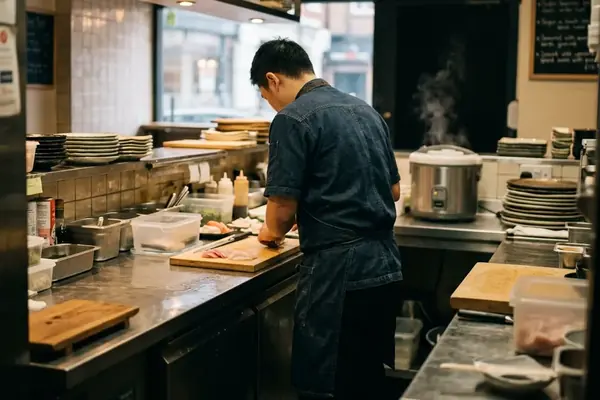
Give the meal the widest allowance when sushi & dining is the point of the night. Choose the next stop nearby, ideally somewhere that does not turn the transfer into a second journey. A long cross-London move after several courses usually consumes the cocktail window rather than improving the night.
Cocktails-Led
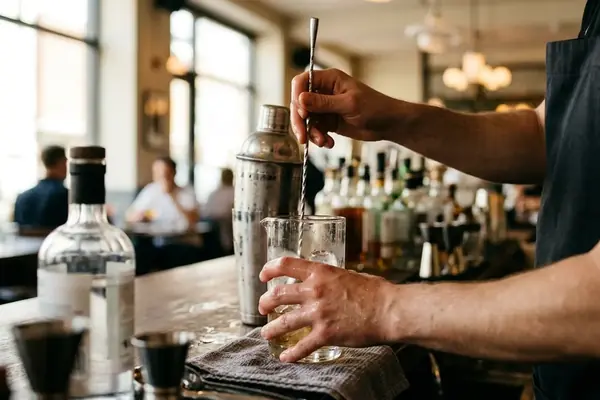
Meet earlier if the group wants to explore cocktails & bars. That creates room for a second bar without forcing everyone to finish their first drink while someone calls a car. Pick one primary venue and one nearby fallback; a list of six options invites pavement negotiations.
Event- or Club-Led
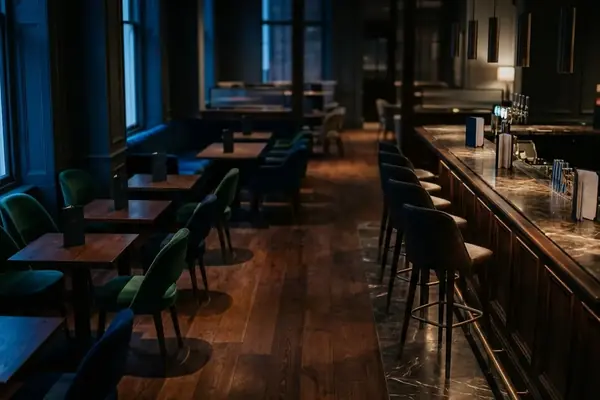
For live music & events or a club-led plan, calculate the evening from the door time. Dinner and drinks become supporting phases. A later entrance may deliver more atmosphere, but it also leaves less tolerance for guest-list checks, security, cloakroom processing or a queue at an upscale venue.
A flexible framework works better than rigid choreography. Set the fixed points, allow breathing room between them and agree which phase can be shortened if the night slips.
Book Dinner for the Night Ahead
An illustrative dinner window of 18:30 to 19:30 works well when cocktails or a later venue follow. It is a planning example, not a rule; the right booking must match the restaurant, the itinerary and the group’s genuine readiness.
Confirm the Group Before the Table
Settle dietary requirements and likely late arrivals in the group chat before booking. A table secured for an aspirational arrival time is rarely useful. The reservation should reflect when the slowest confirmed guest can realistically reach the restaurant.
Arrival means standing at the restaurant entrance, not entering South Kensington station at the booking time. Allow for the walk from the platform, the correct station exit and the possibility that someone stops to take a call or check directions.
Once seated, the meal still includes greetings, ordering, multiple courses, bill settlement, coats and the walk to the next stop. If the restaurant applies a table-return time, treat that published condition as a firm boundary and ask about it when booking.
Pro Tip: If the group tends to arrive in waves, make the restaurant entrance the meeting point. It removes the ambiguity of “near the station.”
Protect the Cocktail Window
Cocktails are a phase of the evening, not spare time left between dinner and the final venue.
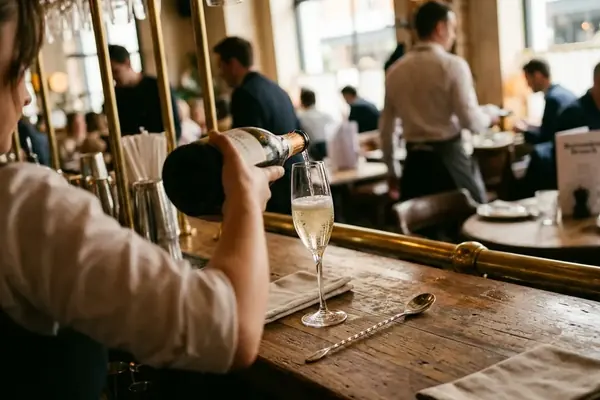
For an early dinner, 20:30 to 22:30 can serve as an adaptable example window for one or two drinks. It does not promise a table or immediate service. On a busy Friday night, relying on walk-in space for a larger group can mean waiting outside or abandoning the venue altogether.
Plan the Transfer as Carefully as the Drinks
Choose one bar and a fallback within a short walk. This keeps the group moving if the first room is full, while preserving the character of the night. Ordering pace, table service, the bill and getting several people back into coats often take longer than expected.
Shisha lounges need a different rhythm. A shisha session is not a quick substitute for a single cocktail; it deserves a substantial, dedicated block. If shisha is central to the evening, make it the destination rather than squeezing it between dinner and club entry.
The same principle applies to a leisurely terrace drink. Outdoor luxury feels effortless only when nobody is repeatedly checking the time.
Warning: Do not build a peak-night plan around unconfirmed walk-in availability. Keep one credible fallback close enough to reach without reorganising transport.
Time the Door, Not Just the Journey
A ten-minute ride does not equal a ten-minute arrival. The useful calculation runs from leaving the table to reaching the main room.
Include the Hidden Steps
- Settle the bill and collect coats.
- Walk to the pickup point or station.
- Travel to the venue.
- Find the correct entrance.
- Complete ticket or guest-list verification.
- Pass security and any dress-code check.
- Use the cloakroom before joining the room.
Failing to account for security and cloakroom processing at an upscale venue can turn an apparently punctual journey into a missed last-entry cutoff. Peak Friday and Saturday arrivals need more protection than a quiet weekday dinner.
For a club-led night, reaching the door around 22:30 to 23:00 is a useful illustrative target. Arriving later may feel livelier, but it sacrifices certainty. Always verify the specific venue’s published entry conditions, ticket terms and last-entry policy rather than relying on a friend’s memory from a previous night.
Keep the Group on One Clock
One organiser should hold the reservations, tickets, addresses and agreed schedule. That person is not there to police the evening; the role is to prevent six separate versions of the plan.
Use Two Times for Important Stops
Share a public meeting time with the group, then keep a private latest-departure time. As an illustrative approach, the organiser might set the public time 15 to 20 minutes before the point at which a delay would threaten the booking.
Be precise about place as well as time. “South Kensington station” leaves room for crossed paths, while “the named exit” or “the restaurant entrance” gives everyone one visible target.
Friends joining midway should receive the next venue’s full address and the time the group expects to leave it. Sending only a live location can direct them towards a table that is already settling the bill.
Decide the Exit Before Midnight
The least glamorous decision often protects the whole night: choose how it ends before anyone is tired.
Pick an Exit Style
- Fixed departure: the group leaves at an agreed time to catch a specific service or meet a booked ride.
- Flexible window: departure can move within a defined period, provided transport remains practical.
- Open-ended night: there is no fixed finish, but the group agrees on a fallback route and meeting point.
Check transport for the actual date. Late-night service patterns, engineering closures and available routes can change, so an option remembered from last weekend may not exist tonight. Use the official Transport for London journey planner before leaving home.
Check live service information again near departure rather than waiting for venue lights to come up. For a fixed exit, doing this roughly 30 to 45 minutes beforehand can function as a practical planning reminder, leaving time to change route or bring the departure forward.
A Polished Evening, Hour by Hour
Here is an explicitly illustrative schedule for a dinner-led South Kensington night with cocktails and a final venue:
- 18:45: Meet at the restaurant entrance.
- 19:00: Sit down for dinner.
- 20:30: Request the bill and begin preparing to leave.
- 21:00: Arrive for cocktails.
- 22:15: Leave the bar.
- 22:30 to 22:45: Reach the final venue’s door.
- Before midnight: Reassess live transport and confirm the exit plan.
Adjust the Schedule Without Compressing It
A later dinner should push cocktails towards a shorter, single-venue stop. A ticketed performance replaces the flexible phase and becomes the anchor. A longer shisha session needs to take the place of cocktails or the final venue rather than being inserted on top of both.
If friends join midway, give them one reliable rendezvous point. Do not make the original group wait at a completed stop while the evening’s fixed booking approaches.
When delay strikes, apply a clear triage rule: protect the fixed booking, shorten or remove the least important phase, and resist compressing every remaining stop. Rushing dinner, drinks and entry merely spreads the disruption across the entire night.
If your group loses thirty minutes after dinner, which part of the night will you cut to protect the booking that matters most?


Add Your Thoughts