

The Night Depends on the Run-Up
A late second round can derail a South Kensington night before anyone reaches the club. Add a slow bill settlement or a bar placed in the wrong direction, and the entry buffer disappears while half the group waits on the pavement for the other half.
This case models a six-person group moving through two contrasting South Kensington bars before an 11:00 pm club-entry target. It is an illustrative planning model rather than a record of performance at named venues. I chose six because it reflects typical booth capacity and standard vehicle constraints closely enough to expose the practical friction: seating, ordering, regrouping and moving together.
The central rule is simple: each bar gets one job.
Bar One protects conversation and coordination. It gives everyone space to arrive, hear each other and settle the decisions that become awkward once the music rises. Bar Two supplies momentum. It should feel livelier, faster and closer to the final destination, without becoming a competing night out.
Where the Buffer Disappears
The vulnerable period starts before anyone calls a car. One guest orders after the others, another checks a disputed item on the tab, and coats come out while the card machine is still moving around the table. Those minor delays compound because six people rarely change venues as a single unit unless the departure has been designed.
Protect the Run-Up
Treat the club-entry time as a fixed appointment. Bar dwell times, orders and transfers should serve that appointment rather than quietly moving it later.
This approach suits South Kensington because the evening often spans several distinct moods: cocktails, dinner, live music and club culture can sit close together while still demanding different acoustics and service patterns. Proximity helps only when the route keeps moving in one direction.
Why One Bar Could Not Do Both Jobs
The group wants proper time to reconnect, followed by a perceptible rise in atmosphere before club entry. Asking one venue to deliver both creates an acoustic and spatial conflict.
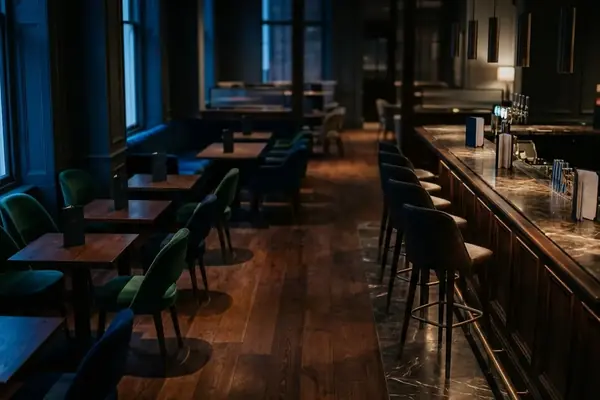
A quiet cocktail lounge supports the first part beautifully. Seated guests can discuss tickets, transport, spending and meeting points without repeating every sentence. Stay there for the entire run-up, though, and the jump from low-volume conversation to the club floor can feel abrupt. The group leaves a settled room and enters a queue before its energy has started to rise.
Starting in a loud bar reverses the problem. Music and visible movement create anticipation early, yet basic decisions take longer when six people have to lean across a table or pass messages along a row. Someone misses the transport plan. Someone else assumes the club ticket is on another phone. The room may be lively while the group remains operationally scattered.
The Route Parameters
The model begins with a 7:45 pm first booking and ends with an 11:00 pm club-entry target. Both bars sit on the line of travel toward the club, avoiding a return through streets already covered.
That directional rule matters as much as venue style. A fashionable bar behind the starting point carries a hidden cost: every minute spent doubling back comes directly from the queue and ticket-check buffer.
The model is deliberately limited to a group of six. Once the party grows beyond eight, coordination and bill settlement take disproportionately longer, and the built-in buffer begins to collapse. Larger groups need a different movement plan rather than a stretched version of this one.
Building Backwards from Club Entry
I anchored the plan at the club door and worked backwards. The target arrival is 10:45 pm, leaving a 15-minute buffer before the 11:00 pm entry. That quarter-hour can absorb a queue, ticket checks, a cloakroom discussion or one guest moving more slowly than expected.
A three-stop route offers more venue variety on paper. In practice, each extra stop adds another arrival, ordering sequence, bill settlement and group extraction. Those transitions can push the club arrival beyond the intended entry time. Two bars preserve contrast without turning the evening into a logistics exercise.
The Working Timetable
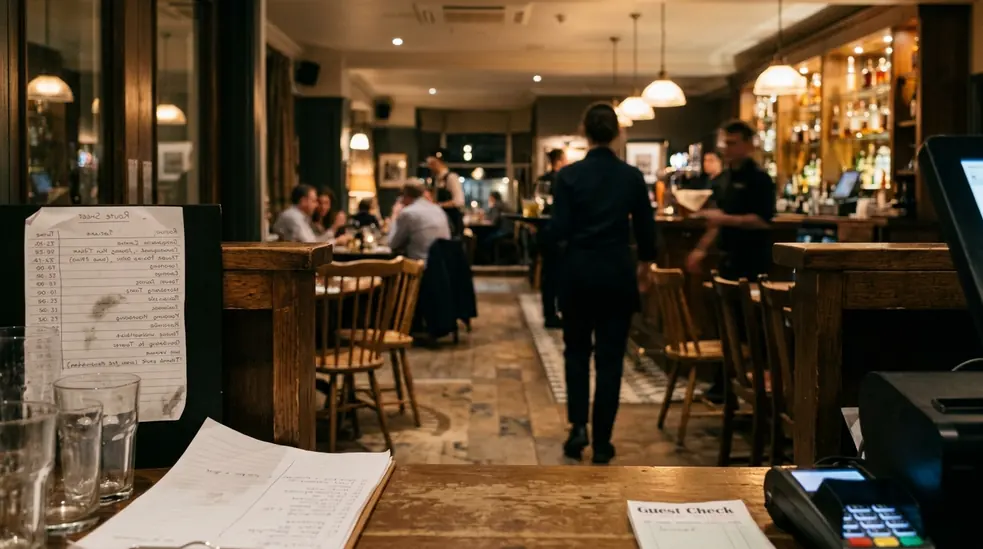
- 7:45–9:05 pm: Bar One, with seated conversation and one deliberate ordering window.
- 9:05–9:20 pm: Transfer to Bar Two.
- 9:20–10:25 pm: Bar Two, with livelier music and quicker service.
- 10:25–10:45 pm: Final walk or booked-car transfer to the club.
- 10:45–11:00 pm: Protected arrival buffer.
The first bar receives the longest dwell time because it carries the evening’s social and administrative load. Bar Two gets a shorter slot, enough to change the tempo while keeping the final departure visible.
Three Tests for the Two Bars
- Bar One must support speech. Six people should be able to hold a shared conversation at normal speaking volume, without splitting into isolated pairs.
- Bar Two must support speed. Ordering, settlement and exit should remain straightforward as the room becomes busier.
- Both venues must support direction. Each movement should take the group closer to the club.
Venue prestige cannot compensate for a poor route. A well-positioned hotel bar with predictable service may serve Bar One better than a celebrated room with uncertain seating. For Bar Two, an energetic standing area near the exit can outperform a luxurious booth buried at the back.
Bar One: Conversation Before Volume
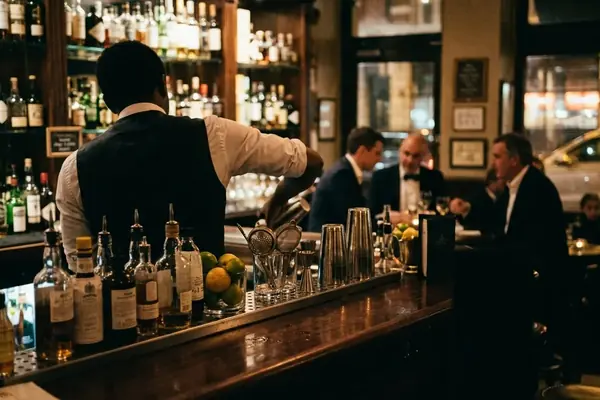
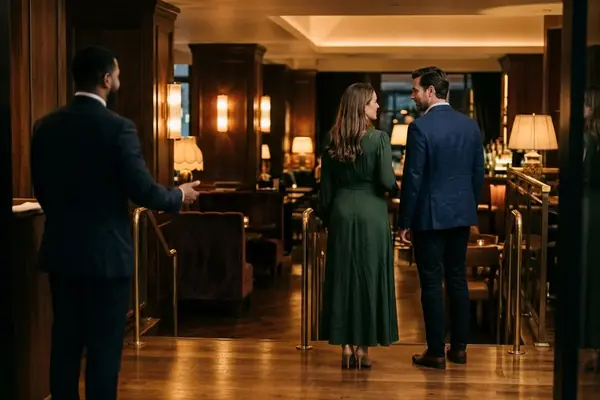
The ideal first stop is a reservable cocktail bar, hotel bar or lounge close to the group’s meeting point. It needs dependable seating, moderate sound levels and a menu available for review before the evening.
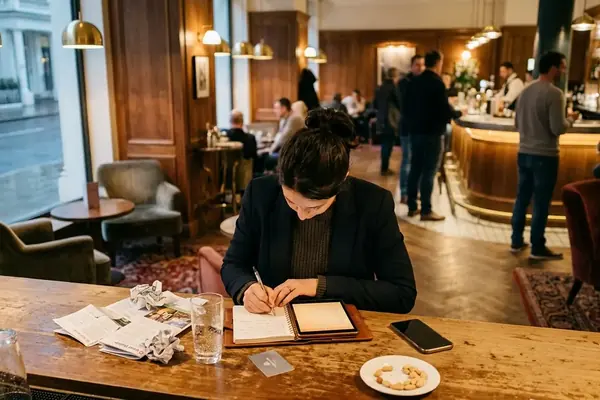
Reviewing the drinks list digitally a day or two in advance reduces at-table deliberation. This does not require six preselected orders. It simply lets guests notice the spirit styles, alcohol-free options, food availability and likely spending range before the first server arrives.
An 80-Minute Social Window
Bar One has an 80-minute total dwell time, from the 7:45 pm booking to the 9:05 pm departure. Its operating objective is precise: everyone arrives, settles, talks and confirms the rest of the night while speech remains comfortable.
Place the first order at 8:00 pm. That gives late arrivals a short margin without allowing the opening phase to drift. At 8:30 pm, check whether anyone needs food or water. At 8:50 pm, request the bill.
The order should happen within one deliberate window. Guests who want another drink can choose one, though the timetable cannot rely on all six people drinking at the same pace. Repeated rounds create staggered glassware, staggered decisions and staggered readiness to leave.
One Clear Order
Use the first service interaction to cover cocktails, water and any food the table needs. Fewer decision points make the 8:50 pm bill request feel natural rather than premature.
For guests pairing dinner with drinks, this is also the place to assess whether food has been sufficient. The check belongs early enough for service to respond without holding the group after the bill arrives.
Anyone monitoring alcohol intake can use the UK Chief Medical Officers’ low-risk drinking guidance when deciding what to order across the evening.
The Transfer That Keeps Six Together
The walk between bars changes the mood. Conversation loosens, the group leaves the settled posture of the first room, and anticipation begins to build before Bar Two supplies louder music.
I would assess this transfer during peak evening conditions rather than relying solely on a digital map estimate. A route that appears short can still split six people across traffic-light cycles, especially when major crossings interrupt the pavement flow. The useful route keeps the group visible and fits inside the 15-minute maximum transfer allowance.
Settle Before Coats
The first bill should be closed before departure time. Waiting until everyone is standing to inspect the tab produces exactly the sort of delay the route is designed to avoid.
Agree one regrouping point outside Bar One and one arrival point at Bar Two. These should be obvious physical locations, shared before the group moves. The organiser counts six people at each point instead of trying to reconstruct attendance from raised hands and separate messages.
Keep Six Visible
If a crossing divides the group, the front half waits at the next agreed point. It does not continue toward the second bar and assume the others know the route.
The transfer also reveals whether the schedule has started slipping. A departure delayed by 15 minutes activates the fallback rule: compress or skip Bar Two to protect the club-entry buffer. Deciding this before the night removes the pavement debate where six people argue for six slightly different plans.
Bar Two: Energy with an Exit Plan
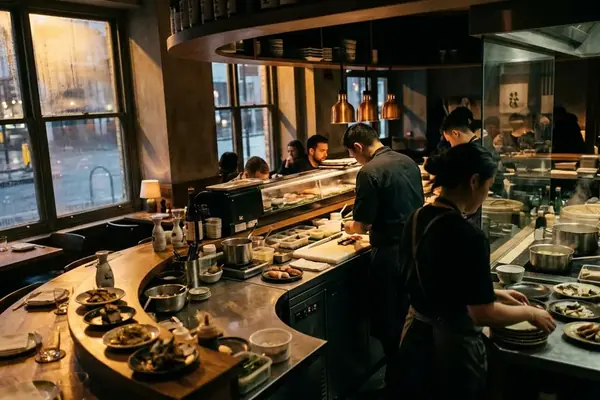
Bar Two is selected by tempo. Stronger music, visible movement and quicker service should tell the group that the night is advancing.
Luxury alone is a weak criterion here. A deep booth may look appealing, yet extracting six coats, bags and half-finished conversations from it takes time. Standing room or a high-top area near the exit fits the job better. The group can arrive, order and retain an awareness of the room’s movement.
A Shorter, Faster Stop
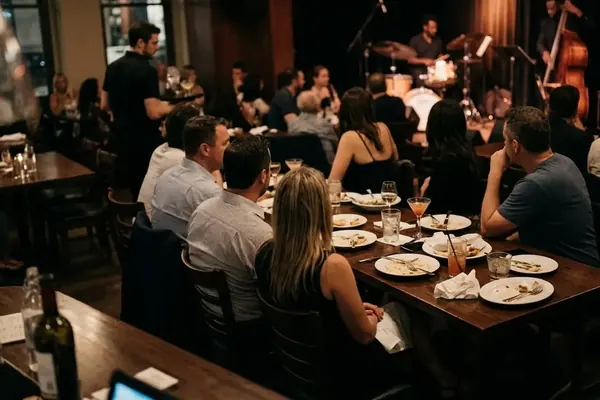
The second-bar slot runs from 9:20 to 10:25 pm. It stays shorter than the first because the purpose has changed. Conversation no longer carries the whole evening; music and crowd energy now do more of the work.
Use one ordering window here as well. Quick service matters more than cocktail theatre, and the group should avoid a drink that requires a lengthy table ritual when the bill settlement trigger is already fixed at 10:10 pm.
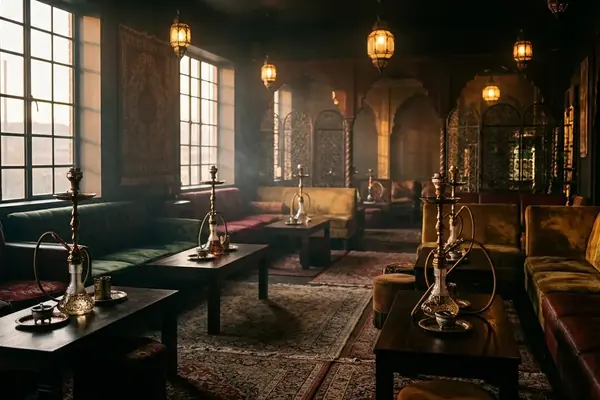
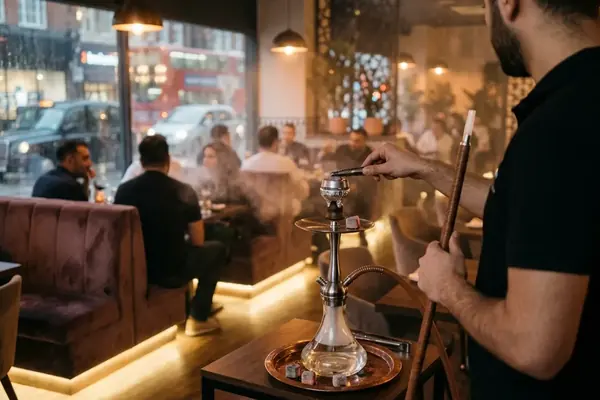
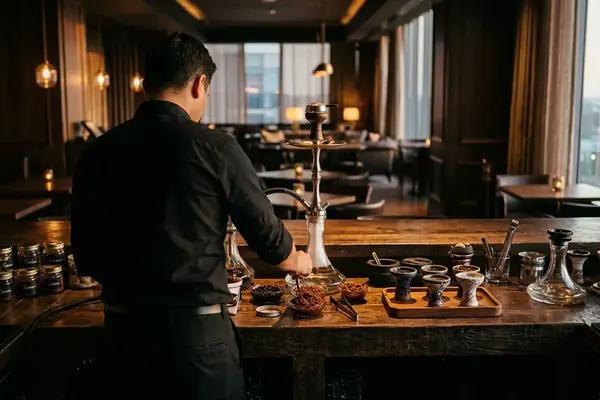
A shisha session also conflicts with this particular stop. Shisha lounges invite settling in, while Bar Two needs an easy departure. Save that format for an evening when the lounge itself is the destination.
The Exit Must Stay Easy
At 10:10 pm, settle the bill even if the room has just reached its best atmosphere. This is the discipline that keeps Bar Two in its assigned role. The final departure happens at 10:25 pm, leaving a 20-minute transfer window to the club.
The group should already know whether that final movement is a walk or a booked car. Searching for options at the kerb turns transport into another group decision, and late-stage decisions move slowly when the music is still audible behind everyone.
What the Two-Job Route Changed
The model can be assessed through declared operational measures: two venue stops, two planned group movements, no backtracking, one ordering window at each bar and a 15-minute club-arrival buffer. These measures show whether the route ran as designed, not how much each guest enjoyed the night.
Leaving Bar Two at 10:25 pm allows 20 minutes for the final transfer. The group reaches the club at 10:45 pm for the 11:00 pm entry target.
Each Room Carries Less
The qualitative change comes from dividing the evening’s demands. Bar One performs the social work: arrivals, conversation, food and water checks, and confirmation of the night’s logistics. Bar Two can focus on pace because it no longer has to provide quiet seating or sustain a full evening’s entertainment.
This also reduces decision fatigue. The late-running rule has already been agreed, so a delay triggers an action instead of a vote. The group knows that Bar Two will be shortened or removed when the club buffer comes under pressure.
The comparison is useful beyond club nights. A brunch followed by live music & events can use the same role-based logic, provided the route and timings are rebuilt around the final booking. The transferable principle is to give each venue a defined contribution and stop asking every room to satisfy every mood.
The 10:45 Arrival
The organiser should keep the route in one chronological card. A single reference point prevents timings from becoming fragmented across several messaging threads.
Copyable South Kensington Route Card
- 7:45 pm: Seated arrival at Bar One.
- 8:00 pm: First order placed.
- 8:30 pm: Food or water check.
- 8:50 pm: Bill requested.
- 9:05 pm: Departure from Bar One.
- 9:20 pm: Arrival at Bar Two.
- 10:10 pm: Bar Two settlement.
- 10:25 pm: Final departure.
- 10:45 pm: Club arrival.
- 11:00 pm: Entry target.
The Late-Running Rule
If Bar One runs 15 minutes late, preserve the club buffer by compressing or skipping the second stop. Asking six people to rush drinks shifts the pressure onto guests and usually leaves someone behind in the ordering or settlement sequence.
Club Time Wins
When the route slips, remove optional dwell time. Keep the 10:45 pm arrival intact.
What the Organiser Holds
- Both bar booking confirmations.
- Club tickets and the stated dress code.
- Accessibility requirements for venues and transfers.
- The walking route and weather check.
- A transport fallback for the final movement.
- The agreed spending cap.
- One shared meeting point for any separation.
At 10:25 pm, six coats are already on and the second bill is closed. The organiser counts the group beside the exit, the music falls away as the door opens, and all six step onto the South Kensington pavement with 20 minutes left for the final approach.

Add Your Thoughts