Good shisha lounge etiquette is mostly about pace, awareness and respect for the shared table.
That sounds simple, but it changes how the evening feels. A South Kensington lounge is not a pub queue with cushions. Guests often arrive after dinner on Old Brompton Road, cocktails nearby, a museum evening, a student birthday, or a late-night plan that has not fully formed yet. The shisha sits in the middle of all that, so the table needs room to breathe.
I look at lounges through service flow: how the host seats the group, how the server reaches the pipe, how long the bowl takes to settle, and how the table behaves once the conversation gets lively. First-timers usually relax once they understand that the rules are not mysterious. Book properly, order clearly, share with care, and do not make the staff work around avoidable clutter.
Lounges vary. Some feel supper-club polished; others lean into terrace nightlife. Some serve alcohol, some do not. Some have tight terrace layouts because London’s smoke-free rules limit how enclosed smoking areas can be; the official UK smoke-free premises rules are worth knowing if you wonder why a winter terrace cannot simply be sealed shut.
Key Takeaway: Treat shisha as a shared table experience, not just an order. Your timing, space and tone shape the evening as much as the flavour does.
Book Like You Mean to Stay
Check the Details Before You Arrive
The casual approach is to wander in, ask for a table, then negotiate everything at the host stand. The better alternative is to check the basics before you leave: opening hours, terrace availability, food service, alcohol policy, dress guidance and minimum spend.
That preparation matters more on Friday and Saturday evenings. In South Kensington, peak minimum spend requirements can often sit around £50 to £75 per person, and policies may shift from a flat table fee on weekday afternoons to a stricter per-head requirement after 8:00 PM on weekends. Do not discover that when half the group is already outside in the cold.
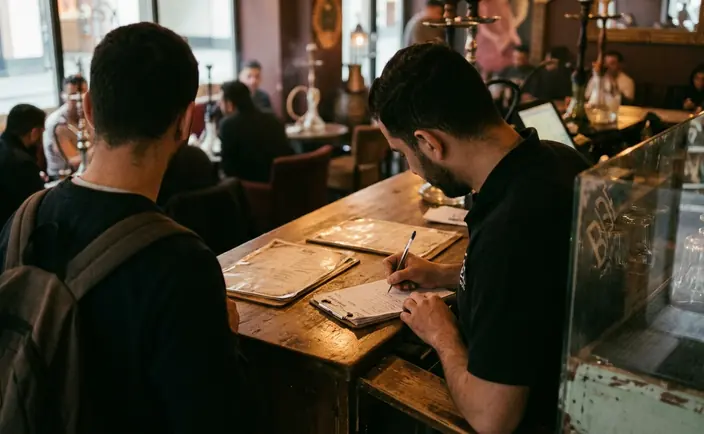
A shisha booking is often closer to reserving a table for an evening than dropping in for one quick drink. Many venues work with a grace period, commonly around 15 minutes, before releasing the table to a waitlist. If you are late, call. If your group size changes, call. If only two people in a group of six plan to smoke, say so.
Front-of-house teams need that information because it affects seating, pipe recommendations and how much table space the server needs. Large, unannounced walk-in groups were never a graceful fit for tight terraces; balanced reservations make the room easier for everyone.
Pro Tip: When booking, say how many guests will smoke and how many are joining for food or drinks only. It helps the lounge avoid overloading your table with pipes you do not need.
Arriving Without Looking Lost
Let the Host Set the Room
Arrival is where first-timers either look composed or start rearranging someone else’s evening.
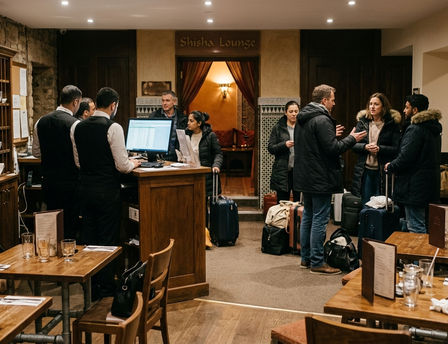
Check in with the host, give the booking name, and wait to be seated. Do not drift onto the terrace and claim a sofa because it looks empty. Do not take unused chairs from another table without asking. In a busy lounge, an empty chair may be part of a booking that is three minutes away from walking in.
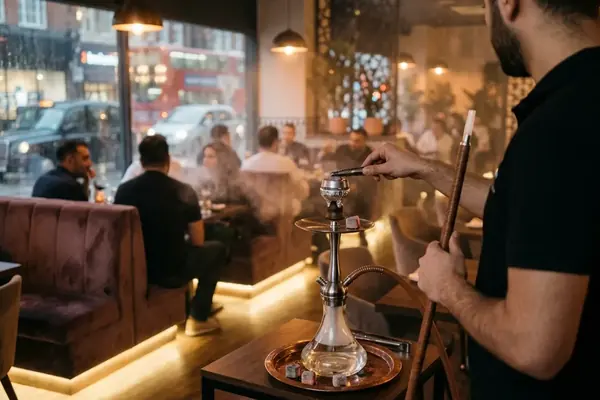
Once seated, keep coats, handbags and phones away from the pipe base, coal tray and server route. The pipe is not decorative furniture. It needs a stable footprint, and the staff need clear access when they bring coals, adjust heat or replace mouth tips.
Terrace greetings need a little discipline too. South Kensington venues often work with narrow routes between tables, heaters and entrances. Say hello, kiss cheeks, shake hands, enjoy the entrance, but do not block a walkway while the server is carrying hot coals.
Cold Weather Has Limits
Local council enforcement of the 50% open-air rule means terraces cannot always be made warmer just because the temperature drops. During severe winter weather, the venue may be doing everything legally available with heat lamps and wind cover, yet the seating can still feel brisk.
Bring a proper coat. Style and sense can share a hanger.
Ordering Your First Bowl
Describe Taste, Not Expertise
First-time guests often think they need to speak in shisha vocabulary. They do not.
Start with plain taste preferences: minty, sweet, citrus, creamy, strong, light, fresh. A good server can translate that into a flavour mix, tobacco style and bowl suggestion. If the lounge offers blonde or dark leaf tobacco, fruit heads, premium mixes or different bowl styles, ask what suits the length of your session rather than choosing the most dramatic option on the menu.
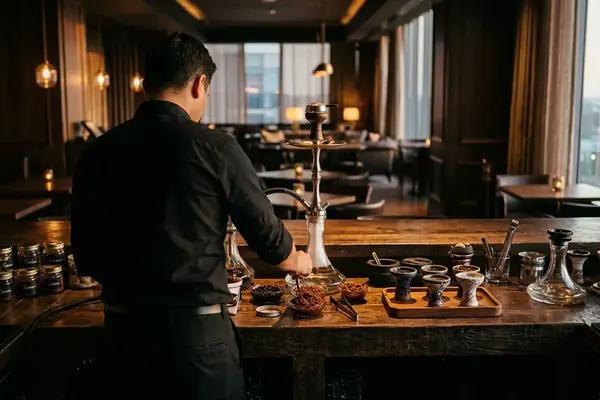
Behind the scenes, bowl preparation is more technical than it looks. Staff may pack the bowl differently depending on the moisture of the tobacco and the heat needed. Standard preparation and initial coal heating often takes somewhere between 12 and 18 minutes before the pipe reaches the table, so do not chase the server two minutes after ordering.
The main first-timer mistake is over-ordering. One pipe can be enough for a small group sharing casually. I have seen a group of six try to share a single pipe, pull too quickly, burn through the coal, and leave the bowl tasting harsh within about 20 minutes. The lesson is not that every person needs a pipe. It is that the number of pipes should match how actively the group plans to smoke.
Warning: More pipes do not automatically mean a better night. Too many can crowd the table, slow service and turn a relaxed lounge session into equipment management.
Sharing Without Awkwardness
Pass the Hose Before It Becomes a Prop
The social rhythm is easy: take a few relaxed pulls, pause, and offer the hose on. Do not hold it through a long story while everyone watches the coal fade.
Sharing is part of the pleasure, but it needs rhythm. If the group is deep in conversation, place the hose where the next person can take it safely. Do not swing it across plates, phones or glasses. If someone says they are fine for now, believe them.
Hygiene is simple and non-negotiable. Use individual mouth tips when provided. Keep your tip with you rather than dropping it back onto the table. Ask for extras before the group runs out, not after three people have started improvising.
Coal management also has its own cadence. Staff typically rotate coals roughly every 25 to 35 minutes to keep the heat steady without scorching the tobacco. Let them do it. Moving coals yourself can damage the bowl, make the smoke harsh, or create a safety issue on a crowded terrace.
Consent Is Part of the Atmosphere
Never pressure someone to smoke. Plenty of guests come for the setting, the tea, the food, the music, or the company. A polished table makes room for that.
Food, Drinks and the Table Rhythm
Order Early If the Group Is Hungry
Shisha stretches time. That is part of its charm, and also the reason hungry groups should order food early.
A lounge session can blur the boundary between dinner, dessert and late-night drinks. If everyone arrives saying they only want a light bite, but the first bowl lands before any food order, the table may spend the next hour grazing on nothing while the mood dips. Put in the food order first if the group has not eaten.
Drinks need the same table awareness. Keep glasses away from the pipe base and coal tray. Avoid building a skyline of half-finished drinks, handbags, chargers and dessert plates around a hot setup. Small tables look generous at the start of the evening and suddenly feel tiny once the pipe, plates and glassware arrive.
Common pairings include mint tea, coffee, soft drinks and cocktails, depending on the venue’s licence and house style. Do not assume alcohol is served everywhere. In some lounges, the non-alcoholic drinks list is part of the identity, not a consolation prize.
Read the Table, Then Order Again
If the group is settled, another round can make sense. If people are leaning back, checking trains, or moving on to a club, stop ordering out of habit.
Dress, Phones and Lounge Atmosphere
Look Like You Chose the Room
Upscale South Kensington venues may expect polished casual or smart eveningwear. Check the dress guidance before arriving, especially if you are moving from a student evening, daywear museum visit, or casual pub stop.
This does not mean dressing stiffly. It means looking intentional. Clean trainers may pass in one venue and miss the tone in another. Sportswear, beachwear and overly casual layers can become a problem at more selective doors, particularly later in the evening.
Phones are where the room often loses its elegance. Ask friends before filming. Avoid capturing neighbouring tables. Do not use flash in a low-lit lounge where people have chosen the corner precisely because it feels private.
Loud video calls, speakerphone conversations and disruptive filming turn a shared venue into your personal studio. That is poor etiquette, even if nobody says it directly. South Kensington nightlife has enough theatre without guests directing their own broadcast.
Capture the Mood Quietly
A quick photo of the table is usually fine. A ten-minute content shoot beside another group’s dinner is not.
Bills, Tipping and Small Problems
Know What You Are Paying For
Before the bill arrives, groups should understand the likely components: shisha, food, drinks, service charge, premium flavours, extra pipes and any late-night minimums that apply.
Payment awkwardness usually starts when only some guests smoke but everyone shares the table. Set expectations early. If two people ordered the pipe and four others came for drinks, decide whether the shisha is split by smokers, shared by the table, or covered by the person who ordered it. None of these choices is rude; springing the decision on people at midnight is.
Discretionary service charges in South Kensington establishments often range from about 12.5% to 15%. Check whether it has already been added before tipping extra. If the server managed a complicated group, handled coal changes attentively, adjusted a harsh bowl, or kept food and drinks moving without fuss, an additional tip can be a gracious gesture.
Handle Problems While They Are Small
If the pipe tastes burnt, the coals feel too aggressive, or the flavour is not what you expected, tell the server early and calmly. Waiting until the end of the session helps nobody.
Most small problems have simple fixes: a coal adjustment, a fresh mouth tip, more heat, less heat, or a quick check on the bowl. The best guests are not silent when something is wrong. They are clear, polite and timely.
That is the etiquette thread running through the whole night: make the table easy to serve, easy to share and easy to enjoy. First-timers who understand that rarely look like first-timers for long.



Add Your Thoughts