
Premium shisha in London has stopped behaving like a side room tacked onto a late-night venue. In South Kensington, the stronger examples now feel closer to terrace-led hospitality: booked tables, measured lighting, proper food, drinks that hold their own, and staff who know when to step in without hovering.
The shift is easiest to see after dinner. Guests are not only asking, “Where can we smoke?” They are asking where they can sit comfortably, talk, order well, stay warm, and keep the night moving without dropping the standard of the evening.
Table of Contents
- Why Premium Shisha Is Moving Upmarket
- What “Premium” Means in a Shisha Lounge
- The Dining, Cocktail and Shisha Crossover
- Design Details Driving the Upgrade
- Rules, Ventilation and Responsible Service
- What This Means for South Kensington Nights
- Scope and Limitations
- Key Takeaways for Readers
Why Premium Shisha Is Moving Upmarket
The old model was simple: eat somewhere, then find a lounge if the group still had energy. That is no longer how the sharper end of London nightlife is being planned.
Premium shisha now sits inside a broader evening. A birthday table might start with sushi, move into cocktails, and settle into a heated terrace without changing the mood. A date might need softer music and staff who do not rush the table. A group of international students may want the buzz of a night out without the chaos of a club queue at 10pm.
The editorial team tracked licensing applications for mixed-use hospitality spaces rather than standalone smoking venues to understand this shift. The interesting pattern was not a sudden rush toward shisha-only concepts. It was the quiet integration of shisha into venues already thinking like restaurants, bars, and late-night hosts.
South Kensington is well suited to that upgrade. It has museum-area visitors who drift into the evening, hotel guests looking for polished late options, residents who prefer a controlled atmosphere, and students who know exactly which room feels right on a Thursday night.
That mix raises expectations fast.
What “Premium” Means in a Shisha Lounge
Premium does not begin with a gold menu or a dramatic entrance. It begins with routines.
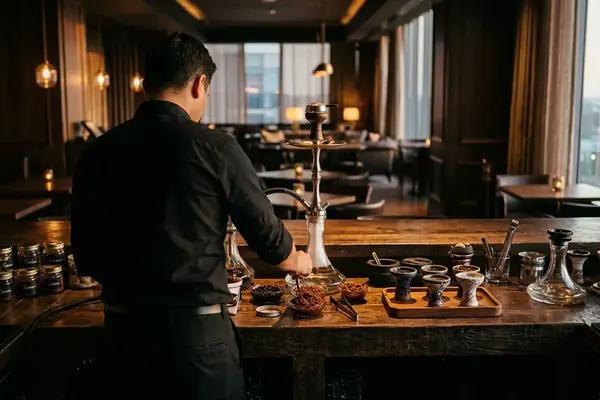
Operational hygiene was the primary lens I used here: clean table resets, well-maintained pipes, careful coal handling, staff who understand timing, and menus that explain flavours without making guests decode them. Décor matters, but it cannot rescue a lounge where the pipe arrives tired, the coals are handled clumsily, or the table feels forgotten after the first order.
From casual lounge to hospitality-led venue
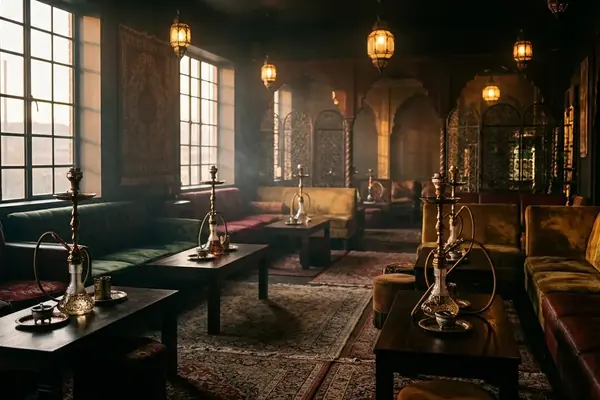
The older casual lounge model relied on familiarity. You turned up, found a seat if one was free, ordered a flavour you already knew, and accepted the room as it was. The newer model borrows from restaurants and members-club-style service: booking systems, dress codes, host stands, curated music, better lighting, and a smoother move from early evening to late night.
This is where service consistency becomes the real test. A premium lounge should make the basics feel easy:
- Staff explain flavour strength and combinations clearly.
- Coal changes happen before the table has to chase them.
- Outdoor or semi-outdoor seating stays comfortable enough for longer sessions.
- Food and drinks arrive with the same care as the shisha service.
- Lighting flatters the table without making the menu unreadable.
Key Takeaway: Premium shisha is as much about environment and service consistency as it is about tobacco, flavour selection, or a photogenic terrace.
The Dining, Cocktail and Shisha Crossover
Premium lounges are now competing with restaurants, cocktail bars, hotel lounges, and members-club-style spaces for the same evening spend. That changes the assignment.
A guest who has just finished dinner in South Kensington is not comparing a lounge only with another shisha venue. They are comparing it with one more drink at the restaurant, a quiet hotel bar, a late dessert table, or a pre-club stop with better music. The lounge has to earn its place in that sequence.
We initially considered categorising venues by imported tobacco portfolios, but rejected this approach because guest dwell time and integrated food and beverage spend tell the more useful story. Evening booking patterns often sit around two hours, which is long enough for a proper hospitality experience and short enough to fit into a wider night out.
Where shisha fits into the evening
- Post-dinner sessions: best for groups who want to keep talking without moving into a loud bar.
- Birthday tables: stronger when the venue can handle food, mocktails, music, and table presentation together.
- Student nights with polish: lively, but still structured enough for bookings and dress expectations.
- Date nights: dependent on seating comfort, lighting, and staff pacing.
- Pre-club meetups: useful when the group wants a central base before heading west, east, or into Mayfair.
South Kensington gives this crossover a natural audience. The neighbourhood can move from cultural afternoon to restaurant dinner to late terrace without the evening feeling forced.
Design Details Driving the Upgrade
A good terrace earns its premium feel in small decisions. Heated seating. Tables spaced so elbows and handbags are not in constant conflict. Low seating that looks relaxed but does not punish guests after the first half hour or so. Marble, brass, and textured finishes used with restraint, not as a substitute for service.
Design analysis focused on acoustic treatment and seating ergonomics because the best lounges manage ambient noise and comfort at the same time. Volume alone is a blunt tool. A room can feel energetic without making conversation impossible.
Across London nightlife coverage, the more convincing venues tend to pace the atmosphere rather than simply turn it up. Early evening can be softer, with lower music and more food-led service. Later, the playlist can thicken, lighting can drop, and the room can lean into a more social rhythm. The guest should feel the change without feeling pushed.
Pro Tip: When choosing a lounge, look at the terrace before you look at the flavour list. If the heating, spacing, and ventilation feel wrong, the rest of the night will work harder than it should.
One common weak point is overinvestment in décor while HVAC and airflow are treated as back-of-house problems. The result is predictable: a room that photographs beautifully but feels uncomfortably smoky once dining tables fill.
Rules, Ventilation and Responsible Service
Shisha service in England sits inside smoking-related legal and operational constraints, so the premium end of the market has to take layout seriously. GOV.UK sets out the framework for smoking at work and public-place restrictions, and operators need to understand how those rules apply to terraces, shelters, and semi-open spaces.
This article is not legal advice. It explains why compliance, ventilation, age checks, and staff training affect the guest experience as much as they affect the operator’s risk.
Local council enforcement guidance was reviewed to understand how venues design compliant semi-open spaces without sacrificing climate control. In practice, strict adherence to the open wall space requirement for legal smoking shelters shapes what a terrace can look and feel like. That is why some spaces feel airy and well-managed while others feel improvised.
Why compliance changes the guest experience
A responsible venue usually feels more organised from the moment you arrive. Staff know where guests can sit. The host can explain terrace availability. Age checks are handled without drama. Coal and equipment routines feel controlled rather than casual.
Warning: Venues operating under seasonal terrace licences may alter shisha availability or seating configurations during severe winter months, sometimes with little notice.
That does not make the night less stylish. Done well, it makes the whole experience calmer.
What This Means for South Kensington Nights
For readers planning a night in South Kensington, the main point is simple: treat shisha as part of the itinerary, not the afterthought.
Foot traffic patterns between museum-district dining spots and late-night lounges shaped the practical advice here. The best evenings usually have a loose sequence: gallery or hotel meet-up, dinner, terrace session, then either a final drink or transport home before the night frays.
How to plan it properly
- Book ahead for peak evenings. Walk-ins can work midweek, but polished terraces fill quickly when groups are dining nearby.
- Confirm terrace availability. Do not assume shisha is running just because the venue is open.
- Ask about minimum spends. They can change depending on whether the booking is pre-club at 8pm or late-night at 11pm.
- Check food service hours. A lounge that feels ideal at 9pm may have a reduced kitchen later.
- Plan transport before the final round. South Kensington is convenient, but late-night timing still matters.
This is where the neighbourhood’s appeal becomes practical. You can build a complete night without chasing the city across three postcodes.
Scope and Limitations
This is an editorial trend analysis, not a statistical market report or medical guide. The boundaries are deliberate: hospitality standards, operational design, service routines, guest planning, and the way premium shisha now fits into London nightlife.
Venue standards can change quickly. Management decisions, licensing conditions, staffing levels, terrace rules, and seasonal demand all affect what a guest experiences on the night. A lounge that feels sharp in early autumn may operate differently in a cold snap; a room that runs beautifully with one floor team may feel uneven with another.
The conclusions here are qualitative and specific to the hospitality side of the category. Public health policy debates sit outside this piece, beyond the general caution and legal context already noted.
Key Takeaways for Readers
Premium shisha lounges are rising because guests want a more complete hospitality experience: atmosphere, service, food, drinks, comfort, and a late-night setting that still feels considered.
The best experiences depend on operational details. Clean equipment, attentive staff, compliant layouts, clear booking policies, and well-managed terraces matter more than a dramatic entrance or a viral table shot.
South Kensington is especially suited to the trend because it blends visitors, students, residents, restaurants, hotels, and polished evening culture in a compact area. That combination makes shisha work best as one chapter in the night, not the whole story.
If you want the stronger version of the experience, plan it like you would a good dinner booking: check the room, understand the terms, arrive on time, and choose the venue for how it runs, not only how it looks online.



Add Your Thoughts