
Table of Contents
- Introduction
- Criteria for Selection
- Stirred, Bitter, and Spirit-Led Choices
- Bright Classics for Busy London Bars
- After-Dinner and Club-Adjacent Orders
- How to Order Without Overcomplicating It
- Scope, Limitations, and Responsible Pacing
- Key Takeaways
Introduction
South Kensington changes character after dinner.
The museum crowds thin out, restaurant streets soften, and the useful late-night decisions become smaller: which hotel bar still feels composed, which cocktail lounge has the right level of music, which table suits a date that should not end at pudding. Late-night licensing transitions in the borough typically sit somewhere between 11:30 PM and 1:00 AM, so the best order is rarely the most elaborate one. It is the drink that fits the room before the room changes.
This is a curated list of classic cocktails for polished South Kensington nights, not a recipe manual. I am interested in drinks that bartenders can execute cleanly, guests can recognise quickly, and venues can serve without turning the bar top into theatre. The right classic should give the evening a line of travel — aperitif, post-dinner pause, quiet conversation, or a sharper step towards a club-adjacent room.
Criteria for Selection
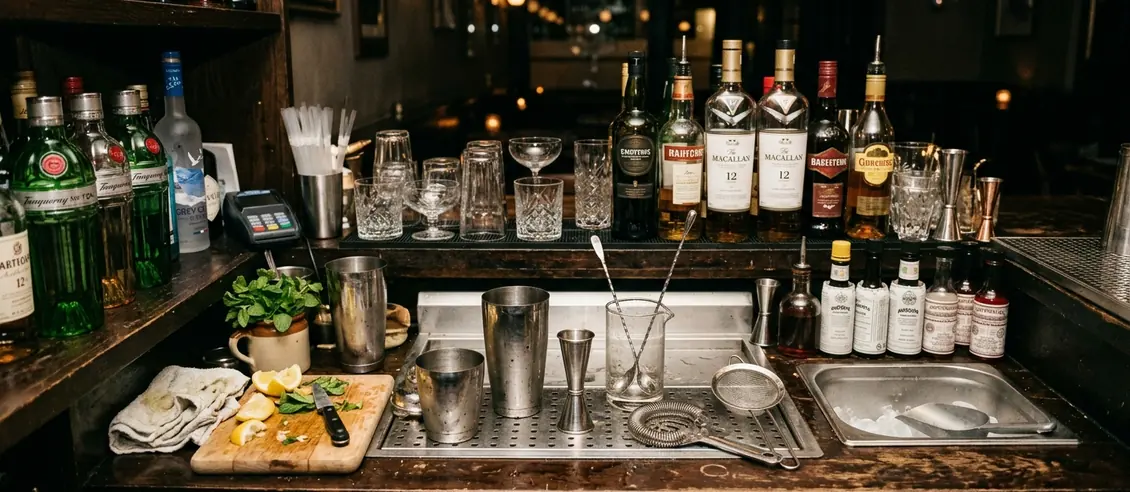
I selected these cocktails through a service lens first and a flavour lens second. A drink can be technically beautiful and still be wrong for a packed, low-lit room at midnight.
The list favours clarity of flavour, dependable availability, service practicality, and a natural fit with upscale London bars. That does not mean every venue will make every drink, or that every bartender will use the same spec. It means a competent cocktail bar is likely to understand the order without needing a seminar across the counter.
We initially considered including modern tiki variations, but discarded this approach because elaborate garnishes and crushed-ice builds clash with the service speed required in dimly lit, high-volume bars. That is not a judgement on tiki as a category. It is a judgement on timing, glassware, garnish load, and the way crushed ice collapses when a drink waits behind a round of Martinis.
For stirred drinks, I also look at architecture. Standard stirred cocktail volumes often sit somewhere around 90ml to 120ml before dilution, which is why balance matters so much. Too much sugar, too much vermouth, or too little chill shows quickly.
- Aperitif: bitter, dry, or sharp enough to wake up the palate.
- Dinner-to-bar transition: clean enough after food, but not flimsy.
- Conversation drink: stable in the glass and comfortable to sip slowly.
- After-dinner drink: richer, darker, coffee-led, or spirit-forward.
- Pre-club order: brisk, recognisable, and easy to serve in a busy room.
Stirred, Bitter, and Spirit-Led Choices
1. Martini
A Martini suits a sharp, composed late-night mood. It is not the drink I order when a table wants to talk over bass-heavy music; it belongs in a bar where the glass arrives cold, the garnish is deliberate, and nobody has to ask whether the olives are decorative.
The main decisions are simple: gin or vodka, dry or wet, lemon twist or olive. Gin brings botanical detail. Vodka makes the texture and temperature more obvious. A drier Martini will feel cleaner and more severe, while a wetter build gives the vermouth room to speak.
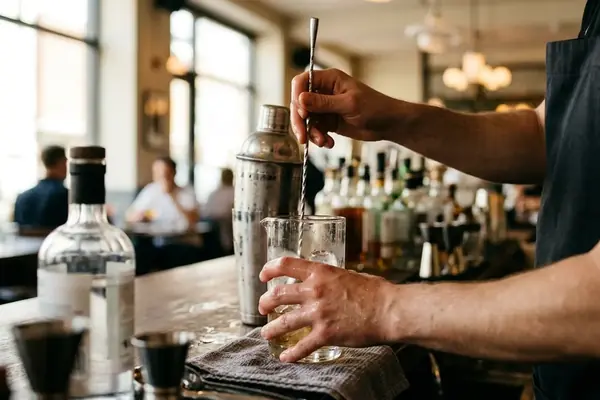
Stirring matters here. A spirit-forward drink stirred for roughly 30 to 45 seconds typically takes on around a fifth to a quarter of its water weight through ice melt. That dilution is not a weakness; it is how the drink becomes drinkable rather than merely cold spirit in a stemmed glass.
2. Negroni
The Negroni is a reliable bitter aperitif for guests who want structure before or after dinner. It carries its own frame: gin, bitter aperitif, sweet vermouth, orange oil, and that useful ruby seriousness that looks correct in almost any lounge.
Its bold profile works best in slower rooms. In a quiet hotel bar, the bitterness gives conversation something to lean against. In a frantic service well, the same bitterness can feel abrupt, especially if the drink is not stirred long enough or the orange garnish is treated as an afterthought.
One practical point: the sweet vermouth changes the drink more than many guests expect. The perceived sweetness of a Negroni, like a Manhattan, can shift depending on whether the venue uses a standard house vermouth or a more botanical Italian style.
3. Manhattan
A Manhattan is the polished, darker classic for whisky drinkers who want the room to slow down.
It fits leather-seated bars, hotel lounges, and late conversations that have moved beyond the first round. Rye will usually give more spice and line. Bourbon brings a rounder sweetness. The vermouth choice matters here as well; a heavily botanical Italian vermouth can pull the drink towards dried herbs and bitter orange, while a softer house vermouth makes the cocktail feel more plush.
I like a Manhattan when the table has stopped scanning the room. It is a settled drink, not a restless one.
Bright Classics for Busy London Bars
5. Daiquiri
Here, Daiquiri means the classic shaken style: rum, lime, and sugar. Not a frozen holiday version. Not a tall glass wearing fruit.
Its late-night value is precision. A well-made Daiquiri is short, cold, acidic, and gone before it warms into something dull. It is also unforgiving. Freshly squeezed citrus juice begins to lose its peak aromatic brightness within a few hours of juicing, so the drink tells you quickly whether the bar takes its prep seriously.
For a busy London bar, that simplicity helps. The build is fast, the glass is small, and the flavour lands immediately. It suits the guest who wants brightness without committing to a long drink.
6. Margarita
The Margarita earns its place when the night moves from restaurant to bar. It has enough acid to reset the palate after dinner and enough presence to survive a livelier room.
Your useful choices are not complicated. Decide whether you want a salt rim, and if the bar asks, whether you prefer a brighter blanco tequila character or something rounder. A full salt rim can dominate the first half of the drink; I usually prefer half-salt because it lets the guest choose each sip.
This is the better alternative to ordering something vague and tropical in a crowded lounge. The Margarita gives the bartender a known structure and gives the table a drink that feels social without becoming sugary.
7. Gimlet
The Gimlet is a crisp alternative to a Martini for gin drinkers who want acidity and freshness without moving into a long drink format. It feels cleaner than many citrus cocktails because it has fewer places to hide.
In practice, the drink depends on the bar's chosen lime component. Some use fresh lime and sugar. Some lean on cordial. The best versions keep the gin visible rather than burying it under sweetness.
It is a good second venue order: brisk, cold, and not too theatrical.
After-Dinner and Club-Adjacent Orders
9. Espresso Martini
The Espresso Martini is a modern classic, not an old-school one, and it has become the natural bridge between dinner and a later room. I treat it as a timing drink. Too early, and it can feel heavy. Too late, and rushed shaking turns it flat.
The method is more technical than the glass suggests. Espresso pulled at around 90 to 93 degrees Celsius needs immediate, aggressive shaking with ice to stop the hot coffee from over-diluting the final drink. That is where the foam comes from, but also where many weak versions fail.
Ordering a complex, multi-step classic in a high-volume club-adjacent bar at midnight can result in a rushed, under-emulsified drink. If the room is three-deep at the bar, choose carefully.
10. Sidecar
The Sidecar gives Cognac, citrus, and orange liqueur in a frame that feels refined without becoming as dark as a Manhattan. It is one of the best after-dinner choices for someone who wants lift rather than weight.
What makes it special is the tension. Cognac brings warmth and dried-fruit depth. Lemon cuts through. Orange liqueur links the two without needing cream, coffee, or spice. In a polished bar, it can feel quietly luxurious.
It is for the guest who wants a classic but does not want whisky, bitterness, or a coffee-led finish.
11. Vesper
The Vesper carries the James Bond association, of course, but that is the least useful thing about it. The useful thing is knowing what you are asking for: a strong, dry, spirit-led drink that is best treated as one deliberate order rather than a casual round.
Because it combines gin, vodka, and a wine-based aperitif, the drink can feel broad and potent. It needs proper chilling and a bartender who understands restraint. If you want three rounds before dancing, choose something else.
For one composed late-night glass, it has real presence.
How to Order Without Overcomplicating It
A standard classic cocktail takes a bartender roughly two to three minutes to build, chill, and garnish in a busy service well. That is quick enough when the order is clear, and painfully slow when every guest adds a private amendment.
Use a simple sequence: name the drink, state the base spirit if it matters, then give one preference. That is usually enough.
- Martini: 'Gin Martini, dry, with a lemon twist.'
- Margarita: 'Blanco Margarita, half-salt rim.'
- Manhattan: 'Rye Manhattan, up, with a cherry.'
- Negroni: 'Classic Negroni, stirred, orange garnish.'
- Espresso Martini: 'Espresso Martini, not too sweet.'
The catch is timing. Highly customised off-menu requests during peak service hours, especially around late evening into midnight, often produce less balanced drinks because the bartender has less time to troubleshoot. In a quiet bar, ask the detailed question. In a busy late-night room, order the clean version.
Also respect concise house cocktail menus. If a venue has edited its list tightly, it may be telling you what it can make well at that hour.
Scope, Limitations, and Responsible Pacing
This list is editorial and situational. It is not a ranking of every cocktail, every South Kensington venue, or every possible late-night order.
Menus change. Bartender specs change. Licensing hours, ingredient availability, citrus prep, coffee setup, and glassware all shift over time. A Martini that feels immaculate in one hotel lounge can feel severe in another room with louder music and warmer glassware.
For official context, the UK Chief Medical Officers advise that it is safest not to drink more than 14 units a week on a regular basis; the full public advice is available in the UK low-risk drinking guidance.
Key Takeaways
- For a sharp start: choose a Martini or Negroni when the bar is composed and the evening still has shape.
- For slower rooms: choose a Manhattan, or an Old Fashioned if the venue's whisky programme looks considered.
- For livelier settings: choose a Daiquiri or Margarita when acidity, speed, and recognition matter.
- For after dinner: choose an Espresso Martini when the bar has the equipment and the room is not too rushed.
- For one strong, dry statement: choose a Vesper, then move on to something gentler.
South Kensington rewards a little planning. The best late-night order is not the most obscure classic on the back bar. It is the one that lets the room keep its rhythm.


Add Your Thoughts