
Entry Is a Spend Strategy
The smoothest upscale club entry in South Kensington usually starts with a less glamorous decision: choose your spend commitment before you choose the room.
That sounds clinical, but it is exactly how a good night stays relaxed. A guest list, walk-in, ticket, table, minimum spend or door spend is not just an access route. It decides when you need to arrive, how exposed your group is to the queue, who has authority at the door and how much friction you may face once dinner, cocktails, shisha lounges and late bars start folding into the same after-dark circuit.
We initially considered structuring this guide around individual venue reviews, then moved away from that because South Kensington door policies rotate too often with the promoter, private booking or hotel event attached to the night.
The practical pressure point sits between roughly 10:45 PM and 11:30 PM, when many venues shift from dinner service to late-night entry. That is when a polite reservation conversation can become a card machine conversation.

Table of Contents
- Entry Is a Spend Strategy
- Criteria for Selection
- Six Entry Routes Compared
- Deposits, Cancellations and No-Shows
- ID, Dress Code and Door Discretion
- Choose the Right Entry Route
- A Worked South Kensington Night
Criteria for Selection
The entry routes below are included because each one changes four things that matter on a real night out: what you pay, when you must arrive, how much certainty you get and what can go wrong at the door.
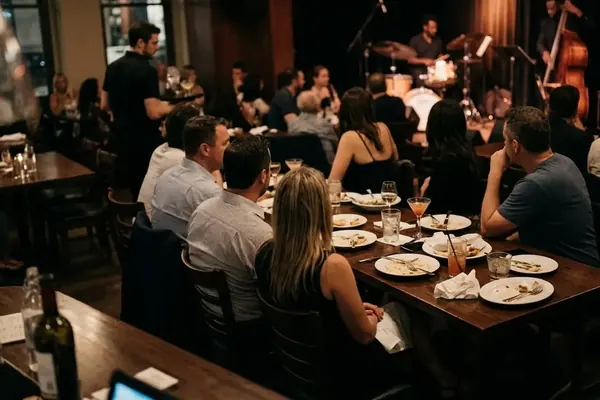
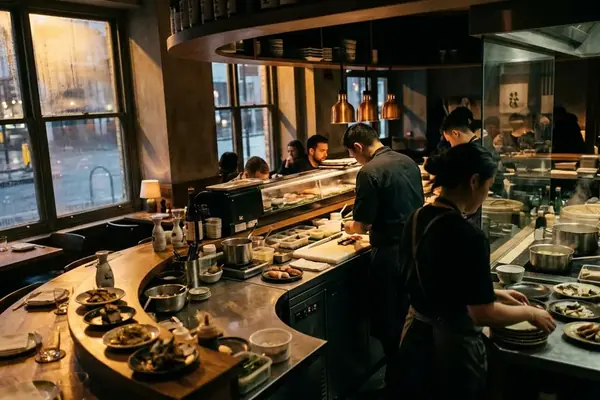
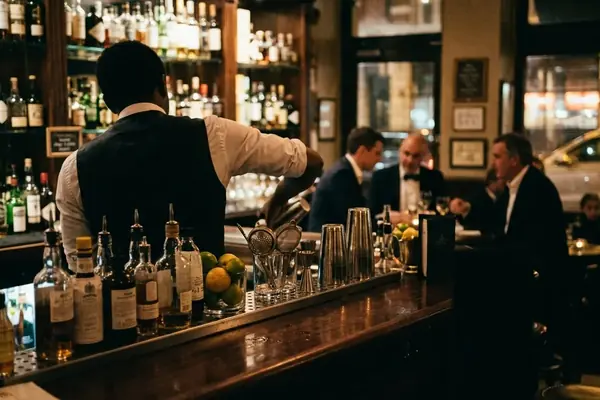
The comparison is deliberately narrow. It covers guest lists, walk-ins, tickets, promoter RSVPs, tables, minimum spends, door spend and deposits. That is the set that actually affects premium London nightlife planning, especially around South Kensington nightlife where sushi & dining, hotel lounges, cocktails & bars, live music & events and shisha lounges often sit within walking distance of one another.
Criteria were selected around the most common pressure points at the entrance: booking timing, payment exposure, queue risk, group suitability, arrival restrictions, cancellation risk and service expectations. Advance bookings tend to be judged across a 24 to 48 hour window before the event. Walk-ins compress that decision into roughly five minutes outside the door.
Key Takeaway: Do not compare entry routes by glamour. Compare them by exposure: time exposure, payment exposure and social exposure while the group is waiting outside.
The timings below assume premium South Kensington late venues on busier nights, especially Friday and Saturday. Quieter evenings can feel looser, but the operating logic stays the same.
Six Entry Routes Compared
1. Guest Lists: Useful, Not Magic
A guest list usually means your name is expected at the door, often through a promoter, host or reservations team. It does not mean the venue has surrendered discretion.
The common mistake is treating the list as a pass. In practice, admission can still depend on capacity, arrival time, dress, group behaviour and the door team’s read of the room. The person controlling the door iPad is often closer to reservations than to the promoter who sent the friendly message.
Guest list cut-off times are often enforced between about 11:00 PM and 11:30 PM. After that, reduced cover can revert to the full door price. If the group is finishing cocktails nearby, that last round can quietly cost more than expected.
Guest lists are best for pairs or small groups who can arrive early, dress cleanly and accept that RSVP status is not guaranteed access. What you may be paying for is reduced cover, priority consideration or acknowledgement at the door, not immunity from capacity limits.
Warning: Assuming a promoter's verbal promise overrides the venue's written capacity limits is how groups end up debating policy on the pavement.
2. Walk-Ins: Flexible, but Exposed
Walk-in entry is the lowest-commitment route and the highest-uncertainty one.
It works when the night still has oxygen in it: earlier arrival, smaller group, no private event, clean dress code and a venue still shifting from bar mode into club mode. It becomes harder once the late-night door is fully active. Walk-in viability drops sharply after around 10:15 PM on Fridays and Saturdays, particularly for groups larger than four.
The better version of a walk-in plan is not simply turning up. It is building a route. Start with dinner or brunch-to-late drinks where the venue has a natural continuation into cocktails & bars, then move before the peak queue sets. Pairs often have about a 45-minute post-dinner window to secure bar space before late-night door operations begin.
Group composition can affect the door, but it should be handled with tact. Door teams are usually assessing balance, behaviour, presentation and capacity, not running a crude checklist. A loud group of six arriving at 11:20 PM with no booking is exposed even if everyone is well dressed.
3. Tickets and Promoter RSVPs: Event-Led Certainty
Tickets and promoter RSVPs matter most when the crowd is driven by a specific event: DJs, live music & events, brand parties, themed nights or a hotel takeover with a defined guest flow.
A paid ticket usually confirms that you have purchased entry to the event. A free RSVP is lighter. It may put your name into the system, but it can still depend on door checks, arrival time and capacity. Treating a free RSVP as equivalent to a purchased ticket during peak entry hours is a bad reading of the risk.
Final entry for ticket holders is frequently capped around 1:00 AM, even where the venue closes at 3:00 AM. That catches people who assume the closing time is the same as the admission deadline.
This route suits guests who care about the act, music policy or theme more than the table position. It is less suitable for groups that want a base, bottle service or a controlled arrival.
4. Table Bookings: Paying for Control
A table booking is not just a place to sit. It can buy structure: hosted arrival, a base for the group, a clearer spend expectation and a named contact if the door gets crowded.
The financial mechanics need separating. A reservation deposit may secure the booking. A prepayment may be money taken in advance toward the night. An agreed minimum spend is the amount the group commits to spend with the venue. Those are related, but they are not the same thing.
Card pre-authorisations for tables usually range from about £500 to £2,000 depending on the tier, and they can be held for roughly 3 to 5 working days. That does not always mean the amount has been spent; it may be a hold. Ask the venue to put the structure in writing before arrival.
The practical script is simple: confirm the arrival time, table duration, included guests, deposit status, minimum spend, service charge and what happens if the full allocation is not consumed. Pre-paid minimum spends rarely roll over to future dates if the group leaves early or does not use the full allocation.
5. Minimum Spend: Commitment, Not a Cover Charge
Minimum spend is the amount your group commits to spend with the venue, usually on drinks or table service, rather than a separate entry fee.
Think of it less as a drinks package and more as a real estate transaction. During peak trading hours, the venue is allocating square footage, staff attention, ice, glassware, stock and a slice of the room’s atmosphere to your group. The price reflects that allocation.
The common approach is to divide the minimum by the number of guests and assume that is the budget. The better calculation adds service charge first. Standard service charges of around 12.5% to 15% are almost always added on top of the agreed minimum spend, not included within it.
Failing to account for that 12.5% to 15% service charge when calculating whether a group can hit a minimum spend creates awkwardness at the end of the night, when the card arrives and half the table has moved to the dance floor.
Pro Tip: Ask for the minimum spend, service charge and any deposit treatment in one written message. Screenshots are clumsy, but they are better than reconstructing a phone call at midnight.
6. Door Spend: The On-the-Night Negotiation
Door spend is the spend expectation discussed at arrival, usually when a venue has availability but wants commitment before admitting a group.
It is the most socially pressured route. The group is dressed, the taxi has gone, everyone can see the queue and the decision now has an audience. On-the-night door spend requirements are often quoted in increments of around £250 to £500 per bottle, with immediate card payment before crossing the threshold.
Use a calm script. Ask what the spend includes, whether service charge is separate, how many guests it covers, where the group will be placed and whether the amount is a minimum or an upfront purchase. If the answer is vague, slow the conversation down.
Door spend can work for a group that wants control but missed the advance booking window. It is not ideal for guests who need budget certainty.
Deposits, Cancellations and No-Shows
The point most people miss is the difference between a card hold and a non-refundable deposit.
A card hold may secure the table and drop away after the night, subject to the venue’s policy and banking timelines. A non-refundable deposit is money at risk if the group cancels late, arrives too late or fails to meet the terms. Cancellation deadlines typically require around 48 to 72 hours written notice, while late-arrival grace periods are often capped at roughly 15 to 20 minutes.
That grace period matters. If a host says the table is held until 10:45 PM, do not plan to step out of the Uber at 10:44 PM. Plan to be visible, together and ready to enter before the cut-off.
For larger groups, one person should own the booking thread. Splitting communication across three friends, one promoter and a voice note is how deposits become arguments.
ID, Dress Code and Door Discretion
High spend does not remove the venue’s legal or operational obligations.
Late-licensed venues commonly scan physical, government-issued ID through ID-verification terminals, regardless of how old a guest appears. A photo of a passport is not the same thing. Nor is a confident tone at the rope.
Door discretion also sits inside the wider licensing framework. The GOV.UK alcohol licensing guidance sets out licensing objectives that help explain why a venue can refuse entry even where a table has been booked or a minimum spend agreed.
Dress code should be read as part of the venue’s positioning. South Kensington has rooms that lean polished hotel bar, rooms that lean club, and rooms that move from sushi & dining into late music without much warning. Trainers, caps, sportswear and oversized casualwear may be fine in one space and fatal in another.
Choose the Right Entry Route
For two people leaving dinner near 10:00 PM, walk-in or guest list can be sensible if the next venue is close and the dress code is already handled. Move early, before the bar becomes a door.
For four to six people, guest list plus an early arrival is the minimum sensible structure. If the night matters, move to a table enquiry 24 to 48 hours ahead. That gives time to see the minimum spend, deposit language and arrival restriction before anyone commits.
For a birthday, client night or group with mixed arrival times, table booking is cleaner. It gives the host one booking reference and gives the group a base. It also makes the financial expectation visible before the night starts.
For a DJ, live performance or themed party, buy the ticket if attendance matters. A free RSVP is useful, but it is not the same level of certainty.
For a spontaneous late move after cocktails & bars or shisha lounges, door spend is the emergency lever. Use it only when the group is comfortable making a quick card decision and understands that service charge may sit on top.
A Worked South Kensington Night
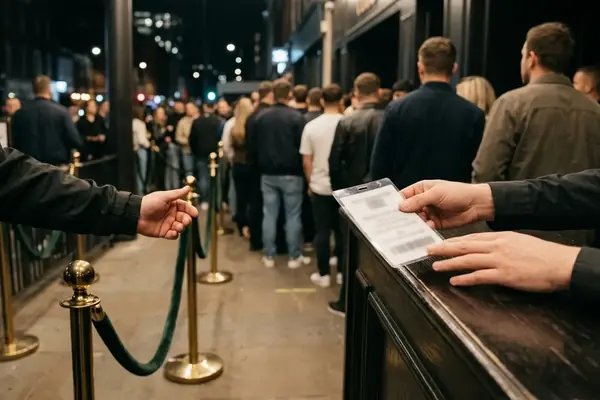
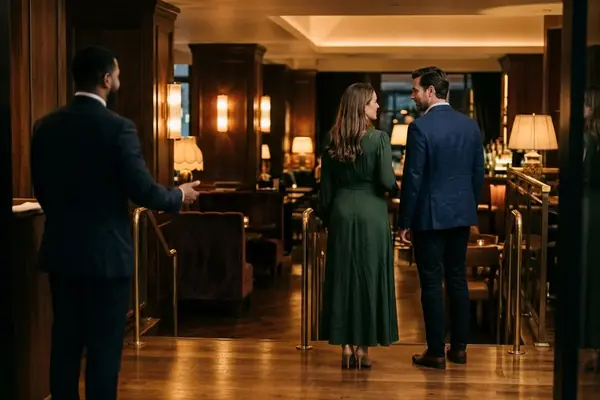
Picture a Saturday that starts with sushi at 8:15 PM, moves into martinis at 9:40 PM and has a table held nearby until 10:45 PM. At 10:35 PM, one guest sends the host a short message: five minutes away, full group together, booking under Malik. The reply lands before the car reaches the corner. At 10:42 PM, the group is outside, IDs in hand, coats still on, no one searching for the confirmation. The host lifts the rope, checks the name and walks them through while the bar is still changing its light for the night.


Add Your Thoughts