
Why Sake Belongs in the Sushi Order
“Which sake should accompany each stage of an upscale sushi dinner in South Kensington?”
That question should come before the bottle list reaches the table. Sake works best when it follows the same logic as the food: the delicacy of the fish, the seasoning of the rice, the intensity of a glaze and the order in which each plate arrives.
I approach the pairing as part of the course progression, with the drink increasing in weight as the sushi becomes richer. This keeps the recommendation focused on what guests are actually eating rather than leaving them to decode brewery names, polishing ratios and premium categories on their own.
The method suits South Kensington nightlife particularly well. Dinner often sits at the start of a longer evening involving cocktails & bars, shisha lounges, live music & events or a late booking elsewhere. Within a dining window of roughly 90 to 120 minutes, guests need a sake order that feels considered without turning the opening half of the night into a lengthy consultation.
Order Before Prestige
Choose sake around the sequence of sushi first. Brewery reputation and price can help narrow the final choice, but they cannot explain whether a bottle will flatter sea bream or overwhelm it.
Match the Sake to Weight, Aroma and Finish
Start with the lightest fish and note how it has been seasoned. A clean, restrained sake can sit neatly beside lightly seasoned white fish because neither aroma nor sweetness crowds the bite. Labels showing polishing ratios below 50 percent may appear among delicate white-fish options, though the ratio alone does not settle the pairing.
As the meal moves towards fatty tuna, grilled elements or richer toppings, the sake needs enough body and savoury character to remain present. A rounded junmai, for example, may carry through flavours that make a highly aromatic bottle feel detached from the plate.
Why Premium Grade Is an Incomplete Shortcut
Pairing strictly by premium grade sounds efficient, yet it overlooks the food. Highly polished, aromatic sake can clash with the savoury depth of fatty tuna or the sweetness of a glaze. The more useful sequence compares three qualities:
- Weight: whether the sake feels delicate, rounded or substantial beside the fish.
- Aroma: whether floral or fruit-led notes support the course or distract from subtle seasoning.
- Finish: whether the final impression stays clean, turns savoury or leaves noticeable sweetness.
Sweetness and pronounced aroma are variables, not automatic markers of quality. Either can be welcome with the right dish. With lightly dressed white fish, both require restraint; beside glazed eel, a little more body and persistence can make sense.
This is why South Kensington sushi pairings are easier to navigate when categorised by escalating glaze intensity rather than regional brewery prestige.
How Temperature and Glassware Shape Each Pour
Temperature changes the way sake presents itself. Heavy chilling can close down aroma, while warmer service can make body and savoury character feel more pronounced. A deliberate temperature therefore belongs in the pairing decision, alongside the bottle and the dish.
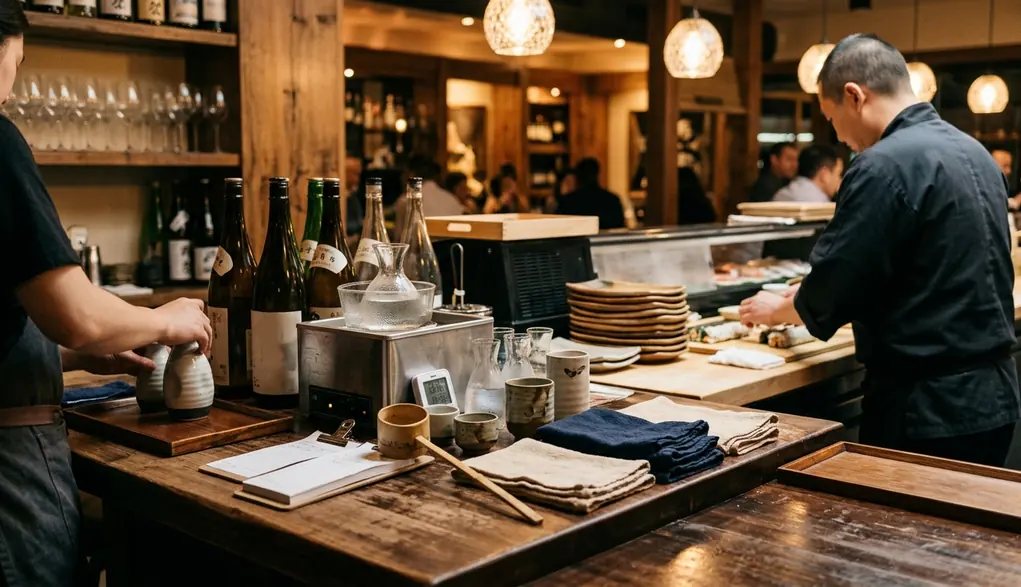
Aromatic ginjo styles can be served at around 10–12°C to retain freshness while allowing their aroma to emerge. Richer junmai may be warmed to about 40–45°C when its structure and the accompanying course support that treatment. The 45-degree technique should remain exclusive to full-bodied junmai styles in a pairing such as fatty tuna; delicate, unpasteurised namazake can quickly lose its structure when warmed.
Cold and Warm Are Starting Points
Rules such as chilling every premium sake or warming every heavier bottle flatten the experience. Producer guidance, restaurant storage and the intended sushi course should determine the final service. A bottle poured with white fish may need a different presentation from one selected for grilled or glazed pieces.
The vessel matters too. A small wine glass gives aromatic sake room to open and makes the nose easier to assess. An ochoko encourages smaller sips and can slow the pace between pieces. For sharing, a 180ml tokkuri carafe is practical, because both diners can follow the same course without committing to a full bottle.
Warm With Purpose
Ask which dish prompted the serving temperature. A useful explanation will connect warmth to body, savoury character and a specific piece of sushi.
A Sake List Should Explain the Meal
A regional list may please an experienced sake drinker, but it gives a first-time guest little help with dinner. Organising the selection by flavour and dining use creates a faster route into the menu.
Practical headings might include light and aromatic, dry and clean, rounded and savoury, and sparkling or richer. Recognised sake names and styles should remain visible beneath those headings, preserving useful detail without making geography the main decision tool.
Show the Commitment Clearly
Formats deserve equal prominence. A guest should be able to see whether a sake comes as a 90ml tasting pour, a 180ml tokkuri carafe or a bottle. That information makes comparison simple and removes the awkward moment when two diners discover that their only apparent option is a full bottle.
Each menu note should do three jobs: describe the flavour profile, state the recommended serving temperature and name two or three dishes that suit it. “Dry, clean and lightly aromatic; served chilled; suited to sea bream and lightly seasoned nigiri” helps someone order. Prestige language without a food connection does not.
For busy sushi & dining rooms, this layout helps staff cross-reference a guest’s order quickly. It also protects the pace of an evening when dinner comes before cocktails, shisha or a ticketed event.
Five Questions That Produce a Useful Recommendation
Diners do not need a technical sake vocabulary. Everyday preferences such as “fresh and dry,” “less floral” or “something with more body” give a good server enough direction to begin.
- Which sake suits the first dishes?
- Will it still work with richer pieces?
- Is it served chilled, cool, at room temperature or warm?
- Can we try a smaller pour?
- Why does this bottle fit our order?
Listen for an answer that refers to the actual fish, its seasoning and the progression of the meal. If the first plates are delicate and the last include fatty tuna or sweet glaze, the server should explain whether one sake can bridge that change or whether two smaller pours will give a cleaner progression.
Translate Preference Into Service
A direct request works well: “We like clean, dry drinks and would prefer less sweetness at the start. Our final dishes are richer. Could you suggest two small pours?” That sentence communicates flavour, pacing and format without requiring knowledge of rice varieties or production terms.
Price and category can then refine the choice. They should not carry the explanation by themselves. “This is our most premium bottle” reveals far less than “this has a restrained aroma for the white fish and enough savoury weight for the next course.”
A Complete Sake Order for Two Diners
Here is a two-person order that can be used at the table. The food is sea bream nigiri, salmon sashimi, tuna nigiri and glazed eel, served in that sequence.
- Give the server the complete order. Say: “We are starting with sea bream nigiri and salmon sashimi, then moving to tuna nigiri and glazed eel. We would like the sake to become fuller as the food gets richer and sweeter.” This lets the server assess the whole progression before opening anything.
- Request the smallest shared format. Ask whether 90ml tasting pours are available. If the restaurant uses another small format, choose that instead of assuming a bottle or fixed tasting flight must be ordered.
- Set the opening pour. Request a clean, restrained sake for the sea bream and salmon. If an aromatic ginjo is recommended, ask for it at 10–12°C and have it poured into small wine glasses so both diners can assess the aroma.
- Plan the handover. Tell the server to bring the second pour after the salmon. Allow a transition window of close to 15 minutes before the richer end of the order, giving the first sake time to finish without overlapping the glazed eel.
- Move to savoury weight. Ask for a 90ml shared pour of rounded, weightier junmai for the tuna and glazed eel, served cool unless the server identifies a clear reason for warmth. Keep it in ochoko cups for measured sips, or request a 180ml tokkuri if both diners want a fuller second serving.
The table now has a precise rhythm: chilled ginjo with sea bream and salmon, a short pause, then savoury junmai with tuna and glazed eel. Finish the first pour before the eel arrives, place the second cups beside the tuna nigiri, and take the first sip immediately before the richer half of the meal begins.

Add Your Thoughts