
Dinner Before the Next Stop
Four diners step off the pavement into a bustling South Kensington dining room. They hold a 19:30 reservation and a firm 21:15 onward commitment at a nearby lounge. At this exact moment, the restaurant format matters just as much as the cuisine. The group evaluates the evening's timeline by working backward from that fixed departure, determining that the dining format must prioritize predictable pacing over an extensive tasting experience. A brilliant meal served too slowly creates anxiety, while a rushed dinner leaves the party unsatisfied before the night has truly begun.
Coordinating dinner with drinks, live events, club entry, or an unhurried end to the evening requires matching the menu structure to the night's rhythm. South Kensington offers a dense concentration of Japanese dining options, each catering to a different tempo. Planners must choose among chef-paced omakase, flexible à la carte sushi, sociable sharing plates, and a later, lighter supper.
The sections below set out how to align these distinct dining formats with your broader evening plans. Understanding the mechanics of how a kitchen serves its menu allows you to book the right table for the right occasion, ensuring the transition from dinner to the next venue feels effortless.
Five Factors That Shape the Booking
When structuring the comparison of local venues, planners often start by categorizing restaurants strictly by price tier. That approach falls apart quickly, because a budget-friendly but slow-paced meal still ruins a timed club entry. A highly efficient premium restaurant often serves a pre-theatre crowd better than a disorganized casual spot. Evaluating the booking across five distinct operational factors yields a more reliable evening.
| Factor | Impact on the Evening |
|---|---|
| Control of Pace | Determines whether the diner or the kitchen dictates the speed of service. |
| Appetite Suitability | Measures how easily the menu adapts to varying hunger levels within the group. |
| Budget Predictability | Reflects the likelihood of the final bill matching initial expectations. |
| Group Fit | Assesses the format's viability for larger parties versus intimate couples. |
| Onward Plans | Evaluates compatibility with strict entry times at subsequent venues. |
Advertised opening hours rarely confirm the actual dining window. Kitchen cut-offs tend to land roughly an hour before advertised closing times. Diners should check last orders and the duration of a particular menu directly with the restaurant rather than relying on search engine summaries. Fixed menus make food spend easier to anticipate, providing a clear baseline for the evening's budget. Drinks, supplements, service charges, and cancellation terms still require attention, especially for larger groups.
Omakase When Dinner Is the Event
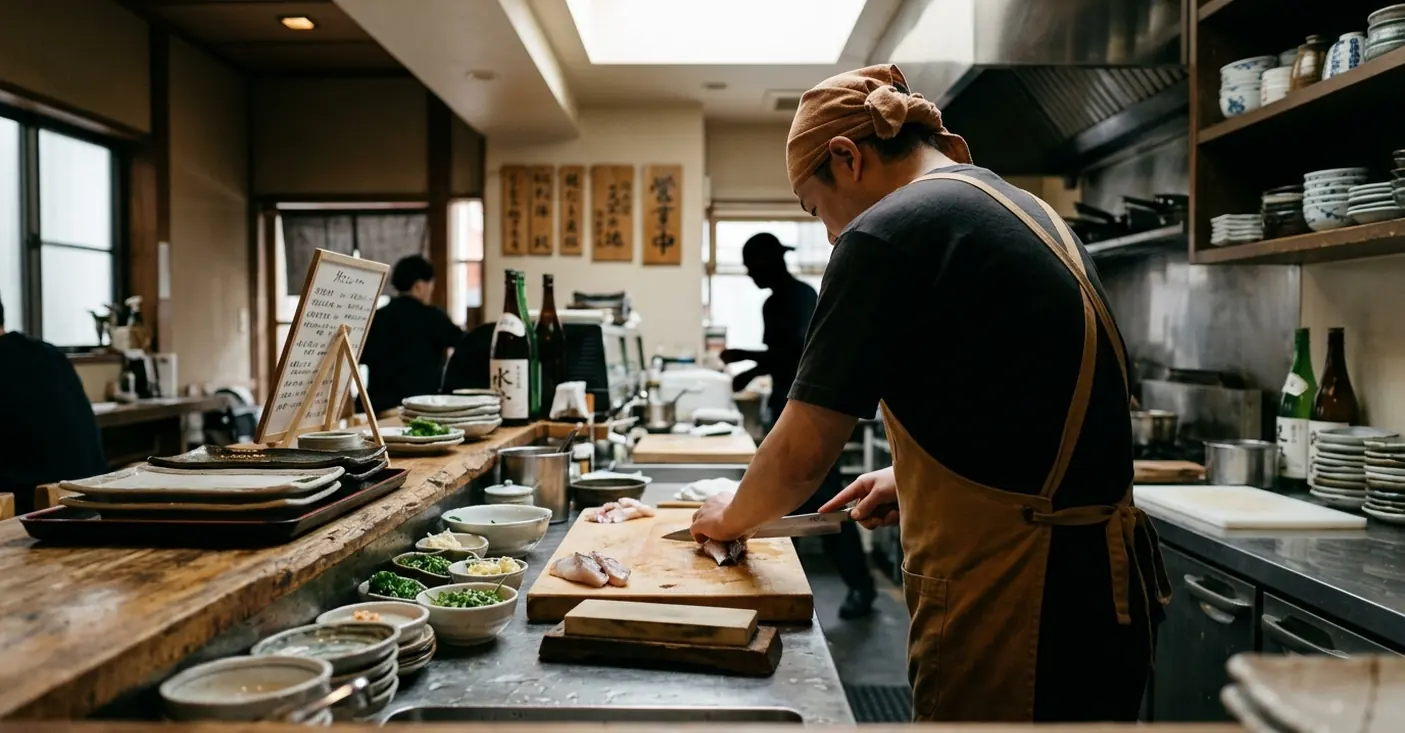
Omakase unfolds as a highly orchestrated, chef-led sequence. The dish order, progression, and much of the pacing sit with the counter rather than the diner. Service duration spans roughly 90 to 135 minutes, delivering about a dozen to fifteen individual courses. The chef builds a narrative through the meal, moving from delicate seasonal sashimi through richer, lightly torched nigiri, culminating in a warming soup or tamago.
Diners commit to this format by intentionally leaving the rest of their evening unscheduled, allowing the chef to dictate the rhythm of the meal without the pressure of a looming departure time. It suits couples or small parties who want dinner to be the main event and can arrive punctually. The intimacy of the counter requires a shared focus on the culinary performance.
Watching individual courses arrive offers a distinct appeal, providing insight into the knife skills and precision of the kitchen. The trade-off involves less control over speeding up, skipping stages, or coordinating staggered arrivals. Booking a multi-course omakase 90 minutes before a strict performance start time guarantees unnecessary stress for both the guests and the chef.
Navigating Dietary Restrictions at the Counter
Strict dietary requirements like severe shellfish allergies or vegan diets often cannot be accommodated on a traditional omakase menu without two or three days' prior notice, and some kitchens may decline the booking entirely. The highly specialized nature of the ingredients means substitutions require significant advance preparation.
À La Carte Sushi for More Control
Ordering individual sashimi, nigiri, rolls, and cooked dishes lets diners adjust quantity on the fly. The table manages the meal's pace by ordering in deliberate waves. Submitting a substantial initial order within about ten minutes of seating establishes the foundation of the meal. The group then assesses remaining time and appetite before requesting a smaller second round.
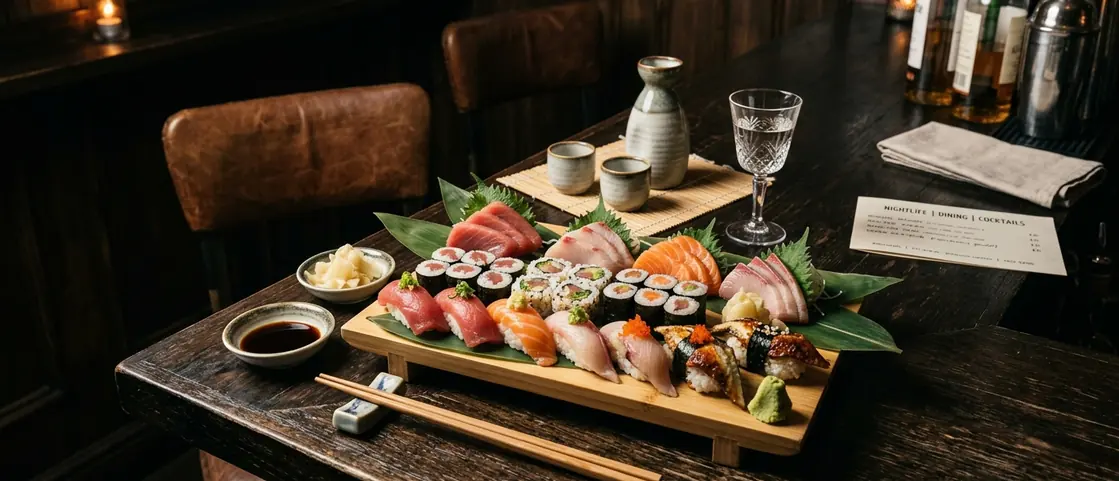
That second round needs somewhere around 15 to 20 minutes for preparation and delivery. Factoring in this preparation window prevents the anxiety of waiting for a final plate while checking watches. This format works beautifully for mixed appetites, diners who know their specific preferences, and evenings with a scheduled next stop.
Apparent flexibility carries a specific risk. Repeated ordering extends the meal and makes the final spend harder to predict. A table that continuously adds single rolls or extra pieces of nigiri will quickly inflate both the duration of the dinner and the final bill. Establishing a clear ordering strategy early in the meal mitigates this issue.
Sharing Plates for a Social Table
Japanese small plates create a highly conversational format. Menus featuring gyoza, tempura, robata dishes, salads, and sushi selections encourage interaction. Friends meeting before cocktails or a club benefit from this communal approach. Sharing suits varied appetites and allows the table to stop ordering once everyone feels satisfied.
To prevent chaotic ordering and duplicate dishes, the group designates one person to coordinate a balanced initial wave of hot and cold plates, while leaving room for individuals to add specific requests later. A baseline of roughly three to four small plates per person provides a reliable starting point for a satisfying dinner. This ensures the table receives enough food without overwhelming the physical space or the budget.
Managing Friction Points in Group Dining
Friction points occasionally emerge during shared meals. Unclear portion expectations, dietary cross-contact concerns, and one person informally controlling the menu require brief discussion before the waiter arrives. Clarifying how many pieces come in a specific roll or whether the kitchen can prepare a separate vegetarian platter keeps the experience smooth for everyone.
Late Supper After the Main Event
Late supper defines the format for eating after a performance, drinks, or an event rather than building the whole night around dinner. The focus shifts to lighter, easy-to-scale choices such as sushi, small cooked plates, rice dishes, or a concise selection for the table. The atmosphere in a late-night dining room often feels more relaxed, catering to guests winding down their evening.
Planners secure a late-night table by verifying the kitchen's final call for food rather than the venue's closing time, ensuring a buffer exists in case the primary event overruns. Last orders might be called at 22:45 for a 23:30 venue closure, for instance. Arriving at 23:00 expecting a full meal will result in disappointment.
Kitchen closing times varying significantly between weeknights and weekends adds another layer of complexity to late-night planning. A shorter or late-night menu offers an advantage for quick decisions. It may offer less choice than earlier service, which perfectly suits a tired or hurried palate looking for immediate satisfaction.
Match the Format to the Night
Applying these formats to specific scenarios clarifies the planning process. Consider an anniversary celebration with no onward deadline; this occasion calls for the immersive experience of omakase. Conversely, a timed event demands the predictable pacing of à la carte sushi. Cocktails with a large group align perfectly with the conversational nature of sharing plates. A post-performance wind-down requires the specific logistics of a late supper.
The final selection is made by cross-referencing the party's size and appetite against the strictness of their next destination's entry policy, defaulting to the most flexible menu style when onward plans remain rigid. Based on multiple visits across the neighbourhood, planners who prioritize logistical compatibility over pure culinary ambition consistently report better overall evenings.
Before finalizing any reservation, run through a concise booking checklist:
- Confirm the availability of your preferred menu format.
- Verify the exact kitchen cut-off time.
- Discuss any dietary accommodations required by your party.
- Review deposit requirements or cancellation terms.
- Request a likely seating arrangement suitable for your group size.
- Calculate the exact distance to the next venue.
A seamless transition relies entirely on geography; the South Kensington itineraries that hold together keep roughly a 10-to-15-minute walking radius between the table and the next set of doors.



Add Your Thoughts