
Table of Contents
- The daytime plan that no longer ends at dusk
- What “brunch-to-bar” means in practice
- Why South Kensington fits the format
- How venues stretch the experience
- What guests are really planning
- What this trend does not prove
- How to plan a brunch that runs late
- The new shape of a South Kensington day out
The daytime plan that no longer ends at dusk
South Kensington brunch is no longer behaving like a neat midday appointment.
The visible shift is simple: afternoon reservation blocks increasingly bleed into early-evening cocktail service, with the original brunch table acting as the first move in a longer social plan. This is not a citywide statistical report, and it should not be read as one. It is a local trend reading, built around how South Kensington venues, guests, and timings now interact on the ground.
Seasonal tracking confirmed a pattern that regular hosts will recognise: guests arrive for food, but they are already thinking about where the table goes next, whether the bar can hold them, and whether the group can stay dressed for the whole arc of the day.
The local question
The issue is not whether brunch has become nightlife in a blunt sense. The better question is how a neighbourhood known for museums, polished dining rooms, hotels, and late drinks has started to treat brunch as a flexible anchor.
That answer sits in venue format, guest behaviour, cocktail pacing, shisha lounges, and late-plan logistics.
What “brunch-to-bar” means in practice
Brunch-to-bar is a continuous hospitality journey: brunch table first, afternoon drinks second, early-evening cocktails third, then optional shisha, club, or live-event plans if the group still has momentum.
Traditional brunch assumes a fixed sitting. Guests eat, order one more drink, settle the bill, and leave. The newer format works differently because it reduces the number of hard resets. A late brunch seating between roughly 14:30 and 15:15 can move into a longer four-to-five hour itinerary if the venue has the staff, layout, bar stock, and confidence to manage the transition.
Timing is the architecture
The timing matters more than the menu copy. A 90-minute table limit creates one kind of day; an extended dwell plan creates another. In the second model, the venue has to think like a host, not just a kitchen.
Late brunch slots are especially useful because they sit close enough to pre-dinner cocktail service to avoid the dead zone that often breaks a group’s mood. The best version feels smooth rather than stretched: plates clear, drinks sharpen, lighting drops, and the table becomes less about eating and more about staying together.
Pro Tip: If the booking starts after 14:30, guests should ask whether the table can be held into bar service before they arrive, not after the second round.
Why South Kensington fits the format
South Kensington has the right kind of daytime pressure. Museums, galleries, hotels, students, residents, visitors, dates, and celebration groups all produce mixed demand across the same streets.
A group may arrive for the V& A, a gallery plan, a birthday lunch, a hotel check-in, or a slow shopping afternoon. Once they are already in the neighbourhood, an evening extension feels natural. The geography supports it: the day does not need to be rebuilt from scratch every time the clock moves.
A polished setting suits a longer arc
The area also has a tonal advantage. South Kensington nightlife is rarely at its best when it feels abrupt. Guests often want the evening to grow out of the afternoon, not jump from museum calm to high-tempo chaos in one step.
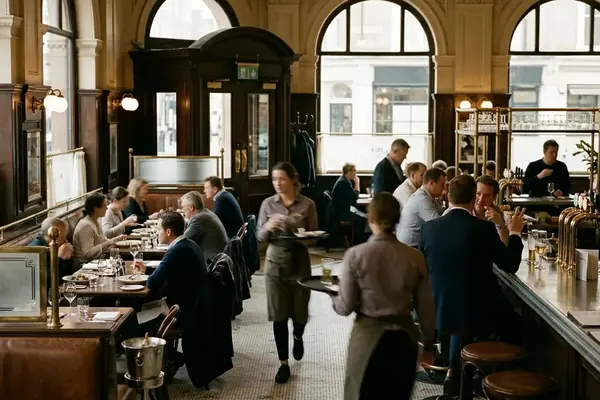
That is where cocktail-led venues, refined dining rooms, and lounge-style spaces become important. They let a group change pace without changing identity. The outfit still works. The conversation still works. The room simply becomes more evening-facing.
Planners looking at local footfall patterns have recognised this basic behavioural logic: people already arriving for daytime culture often need a refined, continuous hospitality environment rather than a jarring change of scene.
How venues stretch the experience
The operational mechanics are more technical than the guest usually sees.
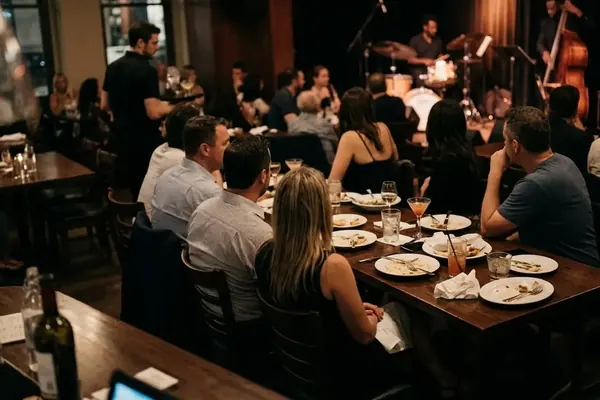
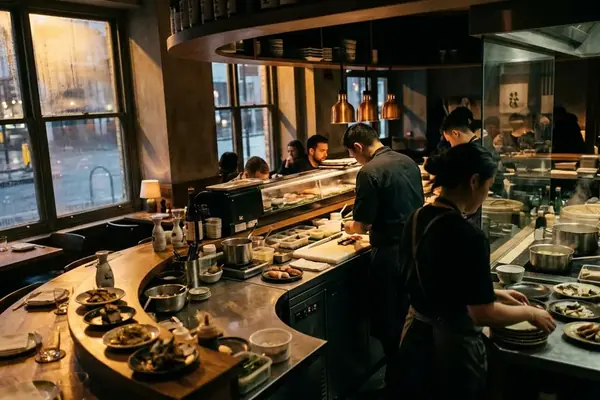
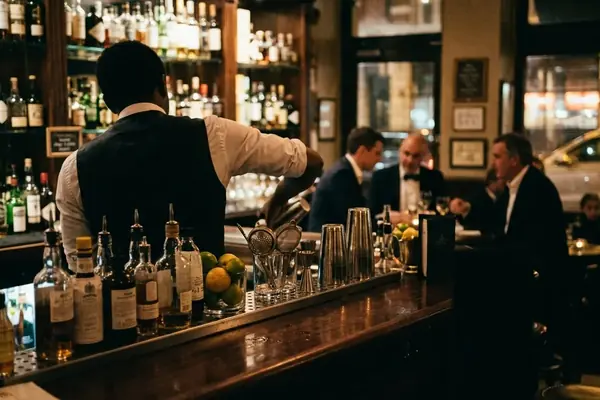
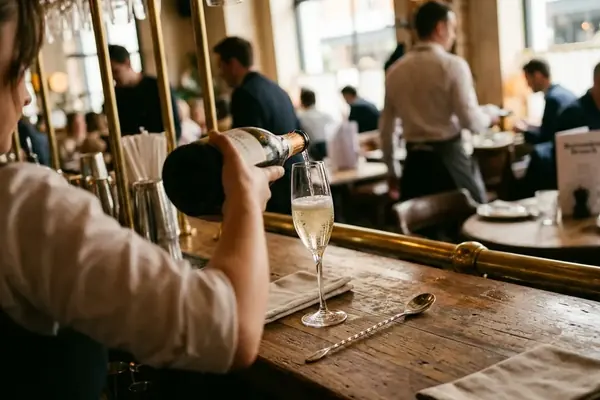
Brunch menus begin to point toward bar snacks and sharing plates. Espresso martinis, spritzes, and sharper aperitif-style drinks take over from coffee-led ordering. Tables that would once have been turned quickly can become lounge seating, bottle-service zones, or semi-private holding points for groups who are not ready to leave.
From lunch room to evening room
One common approach is to enforce strict table turns and protect cover volume. The better alternative, where the room supports it, is to transition selected tables into evening use. Venue managers initially considered hard table-turn policies, then moved toward dining-to-lounge conversion because it protects mood as well as revenue logic.
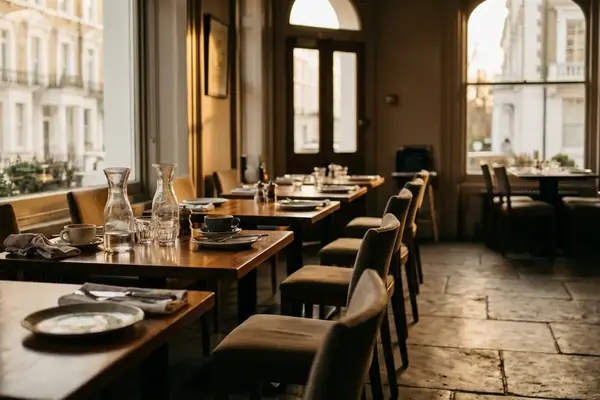
In practical terms, ambience carries much of the work. Ambient lighting may dim gradually in the late afternoon, around 16:45 to 17:15. Audio volume can rise noticeably as lunch service gives way to early-evening cocktails. Those shifts matter because they show the transition is not just decorative; it is scheduled.
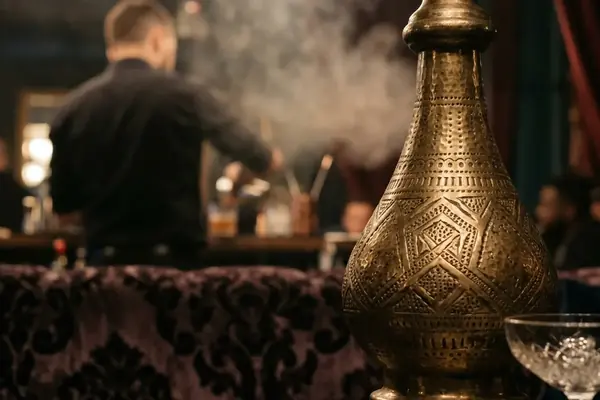
Shisha can also act as a late-plan bridge where it fits the venue and licensing context. Outdoor or terrace-led lounges keep groups together after food without forcing an immediate club decision. The smoothness varies sharply depending on whether the venue has a dedicated outdoor shisha terrace.
Warning: A group that fails to secure lounge seating before the late-afternoon kitchen changeover may find itself displaced just when the evening is supposed to begin.
What guests are really planning
The missions are familiar: birthdays, post-museum dates, student socials, visitor weekends, pre-theatre drinks, and relaxed celebrations that do not want a full club-first agenda.
What has changed is the planning logic. Groups increasingly choose venues where the dress code, soundtrack, and room atmosphere remain suitable from mid-afternoon through to late-night shisha or a final bar stop. They are not only booking food; they are trying to reduce travel friction.
Continuity beats novelty for many groups
Fewer venue changes mean fewer booking risks. They also mean less argument about taxis, coats, weather, heels, queues, and who is still in the mood. A cohesive social mood is fragile. Once it breaks, the rest of the evening can become admin.
There is a practical layer too. Guests need to think about dress code, table time limits, minimum spends, kitchen closing times, and late transport. Transport for London lists Night Tube services on the Piccadilly line operating between 00:30 and 05:30 on weekends; the official Transport for London Night Tube information is still worth checking before building a late plan around the station.
That single transport detail can change the whole itinerary.
What this trend does not prove
Scope matters here. This article draws on local editorial observation, venue-format analysis, and official transport context, but it does not claim that every South Kensington brunch venue has become a nightlife venue.
It also does not claim booking percentages, spend figures, or growth rates. Those should only appear where named, verifiable sources support them. Without that support, the responsible conclusion is qualitative: the format is changing in visible ways, but the scale of commercial growth is not measured here.
The limits of the reading
Because this is a neighbourhood-format reading rather than a controlled footfall study, the conclusion is deliberately bounded. The continuous-flow model can break down during major museum exhibition changeovers or university reading weeks, when local movement becomes erratic and less predictable.
That caveat is not a weakness. It is the difference between useful local analysis and nightlife mythology.
How to plan a brunch that runs late
A good brunch-to-bar plan starts before anyone orders the first round.
Choose a venue with a credible bar programme, not just a brunch menu with cocktails attached. Ask whether the table can be extended, whether the room changes format after lunch, and when the kitchen-to-bar transition actually happens. Kitchen changeovers tend to fall in the late afternoon, roughly 15:45 to 16:30, while pre-dinner cocktail service commonly begins around 17:00.
A practical sequence
- Book the right time: For a late-running plan, a 14:30 to 15:15 seating usually gives the day more structural sense than an early brunch.
- Confirm the table policy: Ask whether the table becomes bar seating, lounge seating, or a hard stop.
- Plan the second phase: Decide on cocktails, shisha, theatre, club, or a quieter hotel bar before the first drink arrives.
- Check the dress code: The outfit should work for food, drinks, and the possible late venue.
- Protect the exit: Know the last comfortable transport option, especially for weekend groups.
For birthdays and visitor weekends, the second phase is the part that needs the most discipline. A group can improvise one round of spritzes; it cannot always improvise a lounge table at peak transition time.
Key Takeaway: The successful brunch-to-bar plan is not accidental; it depends on timing, venue flexibility, and a realistic evening option nearby.
The new shape of a South Kensington day out
Brunch has become a flexible anchor for longer social plans in South Kensington.
The shift is not only about food and drink. It is an itinerary design issue, shaped by local culture, polished venues, cocktail pacing, terrace and shisha options, and the simple convenience of keeping a group together. The strongest venues understand that guests do not experience the day in service categories. They experience it as one continuous social atmosphere.
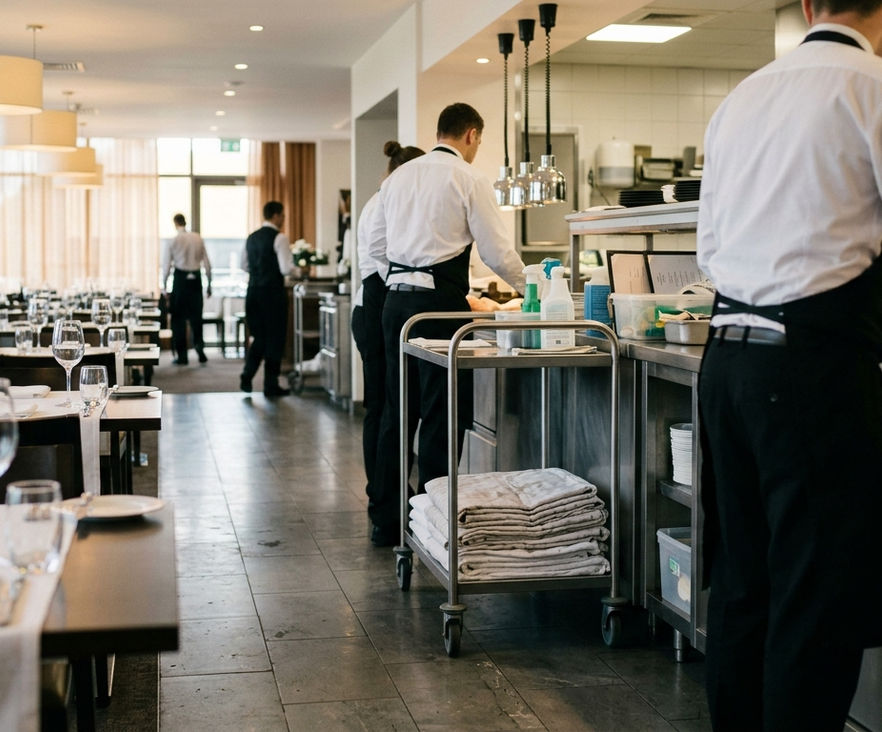
In our review, the most convincing pattern was not the loudest party format. It was the quiet operational intelligence: rooms that know when to soften lunch, when to sharpen drinks, when to hold a table, and when to let the evening begin.
That is the new South Kensington rhythm: culture by day, cocktails by early evening, and a late plan that feels designed rather than bolted on.
Add Your Thoughts