
A day-to-night graduation brunch is a coordinated sequence of brunch, cocktails, dinner and late-night plans, arranged around changing guest numbers and energy levels. The format preserves the momentum of graduation day without asking every relative, friend and coursemate to commit to the full programme.
This South Kensington case model divides the celebration into four phases across an illustrative 12-to-14-hour window. Any example times below are planning examples rather than records of a completed event. The value lies in the structure: each phase has its own guest list, booking pressure and cost model.
Table of Contents
- What a Day-to-Night Graduation Brunch Means
- The Guest List Forced an Early Decision
- Building the South Kensington Venue Sequence
- The Run Sheet That Held the Day Together
- Separating Hosted Costs from Guest Spending
- What Changed in the Four-Phase Plan
- Lock the Dinner Before Announcing the Day
What a Day-to-Night Graduation Brunch Means
The central planning problem is stamina. Graduation ceremonies, photographs and family logistics already demand attention before the first glass reaches the table. Turning the celebration into a single marathon reservation places unnecessary pressure on guests who have different travel plans, budgets and ideas of a good night out.
The planning team therefore mapped the day as an energy arc. Brunch carried the formal graduation moment. Cocktails created space for arrivals and departures. Dinner brought the confirmed evening group together, while the late-night booking served guests who still wanted music and a livelier atmosphere.
Four moods, one celebration
Each phase had a distinct job:
- Brunch hosted the graduate, close family and key friends around a seated meal.
- Afternoon cocktails opened the group to flexible joiners without forcing an exact arrival minute.
- Dinner established the firmest headcount and the most controlled seating plan.
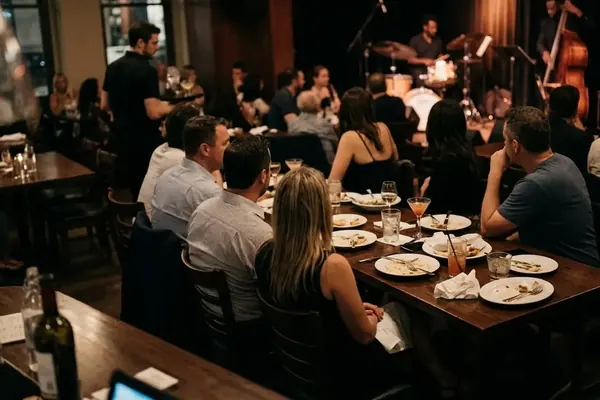
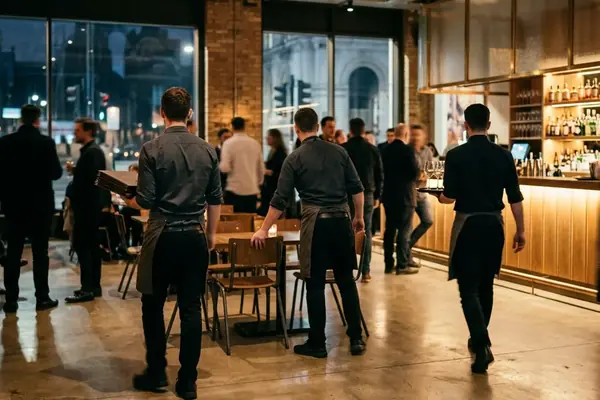
- Late night shifted the focus towards south kensington nightlife, music and optional table service.
That modular shape gives the day rhythm. It also lets an aunt leave after cocktails, a former flatmate arrive for dinner and a larger friendship group join later without making anyone feel as though they attended the wrong portion.
Protect The Peak
Choose the one phase that carries the emotional weight of the graduation. Host and photograph that moment properly, then let the remaining plans become progressively more flexible.
The Guest List Forced an Early Decision
A single all-day reservation looked simple on paper. In practice, it would have tied graduates, relatives, friends and late-night guests to the same schedule. The guest list became workable only when attendance was treated as a set of planning categories rather than one fixed social group.
Four ways to attend
- Brunch guests: the hosted core, usually requiring confirmed seats, dietary details and accessibility checks.
- Afternoon joiners: guests who can arrive during a wider cocktail window and may stay for only one drink.
- Dinner confirmations: the precise headcount supplied to the restaurant by its stated deadline.
- Late-night attendees: guests whose access may depend on advance booking, age restrictions, dress code, last entry or door policy.
These categories describe participation, not importance. Clear labels simply stop a flexible cocktail RSVP from being mistaken for a guaranteed dinner seat.
Dinner drove the first serious decision because a restaurant needs a reliable number for table allocation, deposits and dietary arrangements. The planning window allowed roughly three to four weeks to collect dietary and accessibility requirements. That gave the organiser time to chase missing replies before the venue’s own cut-off.
Cocktails could absorb looser arrivals, especially where the chosen bar accepted a reserved area or a controlled walk-in group. The late-night phase needed a different kind of certainty. A guest saying “maybe later” carries little operational value when a venue requires names, tickets or a table commitment.
RSVP With Purpose
Ask each guest to confirm specific phases. One message with four clear choices produces a cleaner answer than an open invitation to “join at some point”.
Building the South Kensington Venue Sequence
The sequence was built backwards from dinner. An early attempt to book chronologically, beginning with the morning table, was dropped once strict evening seating times started dictating the entire afternoon.
Dinner has the smallest margin for drift. Once its capacity, seating time and deposit terms are secure, brunch can be placed far enough ahead to feel relaxed and cocktails can fill the middle without threatening check-in.
Operational fit beats a famous postcode
A polished room can still be wrong for a graduation group. The shortlist needs to cover the details that shape the day:
- brunch table duration, with two hours used as the standard planning assumption in this case;
- bar reservation rules and whether standing arrivals can join gradually;
- dinner seating time, minimum spend, service charge and deposit terms;
- music level during family conversation and later cocktails;
- step-free access, suitable seating and accessible facilities;
- dress code, identification requirements and late-night entry conditions.
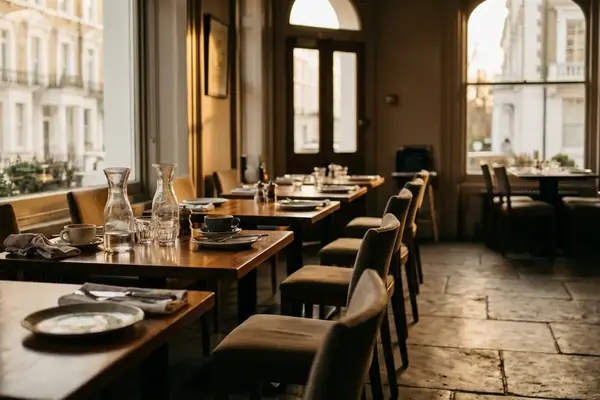
Sushi & dining may suit the evening anchor when the table wants a celebratory menu and a sharper room. A softer brunch setting works better earlier, particularly when family members need time for speeches, dessert and photographs. Cocktails & bars then bridge those two moods.
The continuity test
Every proposed move was checked against a walking radius of about ten to fifteen minutes. The test also covered weather exposure, coat management, uneven pavements and the likelihood that guests would split into smaller groups along the route.
Graduation clothing changes the calculation. Formal shoes, gowns, flowers and gift bags make a short map distance feel longer. One lead person should know the route and the next venue’s check-in name before the group leaves.
The multi-venue format also has a clear boundary: it becomes difficult to manage when the core family group includes elderly relatives who need one stationary setting throughout. In that situation, a hotel or restaurant with separate dining and lounge spaces offers a sounder base than repeated street-level transfers.
The Run Sheet That Held the Day Together
The run sheet avoided back-to-back bookings. It treated bill settlement, photographs, coat retrieval, travel and check-in as scheduled activity rather than invisible minutes that would somehow take care of themselves.
The following matrix is illustrative. Venue deadlines and arrival rules should be replaced with the confirmed terms for the selected date.
| Phase | Arrival Window | Booking Deadline | Cost Model | Fallback Option |
|---|---|---|---|---|
| Brunch | 11:00 AM–11:15 AM | About three weeks prior | Fully hosted | Nearby unreserved café |
| Cocktails | 2:30 PM–4:00 PM | Flexible or walk-in | Individual drinks | Second bar within walking radius |
| Dinner | Illustrative fixed evening check-in | Venue confirmation deadline | Shared or subsidised | Smaller confirmed table |
| Late night | After dinner and before last entry | Door or table-booking deadline | Individual entry or table share | Live music & events bar nearby |
Cocktails carried the handover
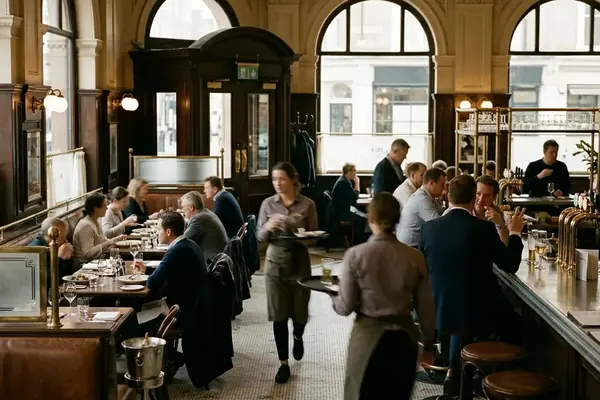
The afternoon window acted as the flexible hinge. Brunch guests could finish at their own pace, evening friends could join, and the organiser could complete the final dinner check without interrupting a seated meal.
Three decision gates controlled the headcounts: confirmation before the hosted brunch, final numbers for dinner and a late-night check against entry conditions. Between phases, buffers of around half an hour to forty-five minutes covered payment, coats and movement. That breathing room mattered more than squeezing in another round.
One named person handled each transfer. The organiser settled brunch and signalled the cocktail departure; another guest checked the dinner table; a late-night lead held booking details and understood last entry. Those handovers reduced the chance of twenty people asking the graduate the same logistical question.
Buffer The Bills
Never set the next arrival time from the moment food service should end. Start from the realistic point at which the final card payment clears and the last coat is found.
Separating Hosted Costs from Guest Spending
The budget became clearer once brunch was defined as the sole hosted graduation milestone. Everything after it moved to a shared, subsidised or individual payment basis, preventing the host from underwriting an open-ended evening.
Costs that need a named owner
The working budget separated brunch food, drinks, service charge, cake or dessert, deposits, transport, dinner, late-night entry, table commitments and contingency. Each line had an owner and a payment point.

Deposits deserve particular attention in a multi-venue plan. The case used refund deadlines falling around seven to ten days before the relevant booking as a control point. That gave the organiser room to release unused capacity before the money became exposed, provided the actual venue terms matched that window.
Three payment models
- Host brunch only. The invitation states that brunch food and an agreed drinks element are covered. Guests pay for later phases.
- Subsidise selected phases. The host covers brunch and perhaps a welcome drink at dinner, while guests settle the remainder.
- Set one hosted element. Guests pay individually after a clearly identified cake, bottle, course or round supplied by the host.
The first model suited this case because it gave the family a contained celebratory moment and kept the evening open to guests with different budgets. It also simplified service-charge discussions: brunch had one payer, while later bookings followed their stated split-payment arrangement.
Clarity belongs in the invitation. A guest should know before accepting dinner whether the table will split evenly, pay by item or contribute towards a set menu. The same applies to shisha lounges, club tables and ticketed live music & events, where a casual “join us later” can conceal a significant commitment.
What Changed in the Four-Phase Plan
The original idea treated the celebration as one continuous guest list. Four distinct phases replaced it, with three scheduled handover points and separate confirmations wherever a booking required fixed numbers.
That structural change produced practical gains. Dinner capacity became easier to protect because only confirmed diners reached the restaurant list. Guests knew when they could arrive and leave. The organiser moved from active hosting towards passive schedule management as the day progressed.
Fewer decisions during the celebration
By brunch, the first arrival list was settled. During cocktails, attention shifted to the dinner gate. After dinner, the final check concerned late-night eligibility and entry timing. Each question appeared once, at the point where it could still be acted upon.
The three handovers also gave the day visible changes of pace. Brunch felt intimate and ceremonial. Cocktails loosened the room. Dinner restored focus around a table, then the final move introduced music, dancing or a lounge atmosphere for those continuing.
This is where segmentation earns its place. A graduation party does not need to maintain the same volume for roughly 12 to 14 hours. It needs momentum, and momentum comes from changing the setting before the current one starts to drag.
Lock the Dinner Before Announcing the Day
The booking order follows the pressure points. Choose the dinner date and realistic capacity first. Shortlist a compatible brunch next, identify a flexible cocktail stop within the walking radius, then confirm the late-night option.
The final booking check
- Record every deposit and cancellation date.
- Collect dietary requirements and accessibility needs within the three-to-four-week planning window.
- Confirm the brunch table duration and dinner seating time.
- Check age restrictions, identification rules, dress code and last entry.
- Ask whether venues permit split bills, cakes, decorations or outside photography.
- Map transport and walking routes between all four phases.
- Assign an owner to each arrival, deadline and payment decision.
A four-row control sheet can track the arrival rule, booking deadline, owner and cost model for every phase. Keep the wider invitation provisional while deposits and restrictive reservations remain unsecured. Once the dinner and any late-night commitment are financially locked, issue one unified itinerary rather than allowing fragments of the plan to circulate through separate chats.
The finished invitation should say exactly what is hosted, where guests may join, which phases demand confirmation and when the final venue admits them. With the dinner table secured, which three phases genuinely deserve a place around it?






Add Your Thoughts