
Why London Event Nights Are Blending Formats
London event nights are becoming less rigid and more deliberately paced. Programmers now tend to map the emotional arc of the room rather than treat dinner, drinks, live music and dancing as separate blocks.
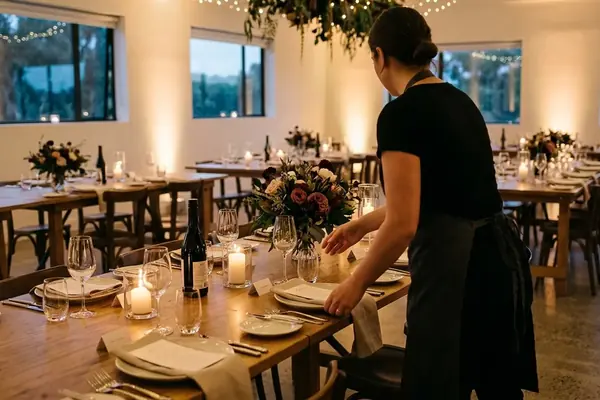
That shift matters in South Kensington because the neighbourhood rarely behaves like a single-purpose nightlife district. A group may start with dinner, move into cocktails, keep a shisha table running, meet hotel guests after a museum visit, then decide whether the night has enough lift for a late session. The strongest rooms account for that mixed intent before the first booking is taken.
This guide is a format analysis, not a listings page. It does not announce confirmed dated events, venue line-ups, guest performers or ticket releases. It explains how DJ-led rooms, live sets and hybrid formats work, and how guests or hosts can read the shape of an evening before committing to a plan.
Key Takeaway: The modern London event night is usually designed as a sequence: arrival, social settling, performance lift, late energy and controlled close.
DJ-Led Rooms: The Core Nightlife Format
DJs remain the anchor of many London event nights because they can hold a room without forcing every guest to watch the same focal point. That flexibility suits cocktail bars, lounges and club-style late sessions where people arrive in waves, eat at different speeds and decide late whether they want conversation or dancing.
How the pacing usually works
The early evening set has a containment job. Music directors often keep warm-up selections in the 100 to 115 BPM range, giving the room enough pulse without flattening table conversation. After 10:30 PM, the energy can move towards 120 to 128 BPM, particularly once the final dining service clears and the room can tolerate more pressure from the sound system.
The practical difference is felt more than analysed. A warm-up DJ should make the bar feel occupied, not urgent. A peak-time DJ can tighten the mix, push familiar hooks and bring in house, R& B, Afrobeats, disco edits, commercial dance or open-format selections, depending on the audience and the brief.
The common mistake is to treat the headline sound as the starting sound. A better approach holds back the biggest tracks until guests have physically shifted from dining posture to social movement. It works because the room receives the tempo change as a cue, not as an interruption.
Live Sets Add a Performance Layer
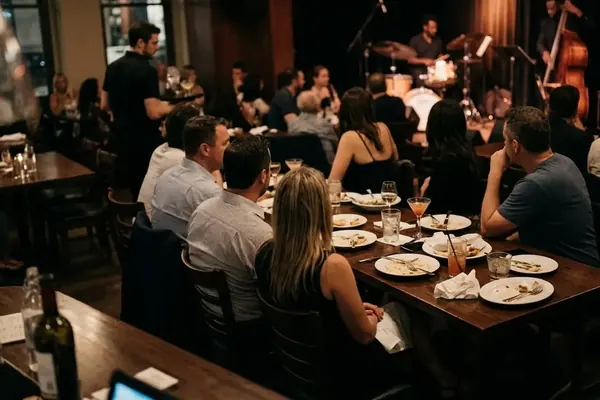
Live sets change the visual grammar of an evening. A vocalist, saxophonist, percussionist, acoustic act or live electronic performer gives the room a visible moment, even when the event is not trying to become a concert.
For dinner-to-late-night formats, that matters. Guests do not always want a theatre schedule, but they often respond to a defined lift in the evening: someone steps forward, the room turns slightly, phones come out, service adjusts and the night briefly has a centre.
Short bursts usually beat concert thinking
Organisers often debate whether to book a full 90-minute concert-style set. In lounge and cocktail environments, shorter 15 to 20-minute performance intervals usually fit the service rhythm better. They create anticipation without asking seated guests to behave like a ticketed audience.
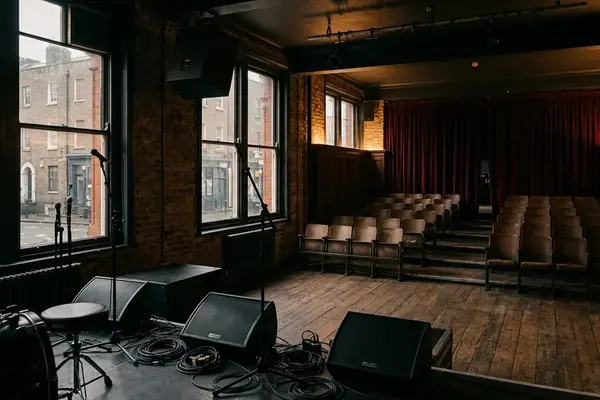
Soundcheck discipline is the unglamorous part. For live elements, completion roughly 90 to 120 minutes before doors open gives operations teams enough time to test monitor levels, table positions, entrances and changeovers. When that window gets compressed, the room may still look polished, but the first performance cue can feel rough.
Warning: A multi-piece live band in a cocktail lounge without adequate acoustic dampening can turn atmosphere into conversational washout, with guests leaving early because they cannot speak across the table.
Hybrid Nights: Where the Formats Meet
Hybrid entertainment formats combine a DJ, live musician, host, themed moment, guest performer or immersive service style. They are not complicated for the sake of it. They solve a simple planning problem: one group wants several versions of the night without changing venue.
A DJ with a roaming saxophonist can keep the mix continuous while adding a performance line through the room. A dinner lounge can use a percussion-led late set to signal that table service is giving way to higher energy. A cocktail event can begin as a seated social plan, then transition into a dance-focused room once the music and lighting align.
Why the layering has to be technical
The best hybrid rooms do not simply place a musician over a track and hope for charm. Producers may require roaming musicians to monitor the DJ's harmonic mixing software so live saxophone or percussion remains in key with the underlying electronic tracks. That kind of coordination keeps the performance from sounding bolted on.
For guests, the benefit is practical. The evening can move from conversation and dining into late-night energy without a taxi, a new queue or a second door policy. For hosts, the benefit is control: the room can be lifted in stages rather than pushed abruptly from lounge to club.
The South Kensington Fit
South Kensington suits blended formats because its audience mix is unusually layered. Residents, students, hotel guests, museum visitors, dinner groups and occasion-led planners can all sit inside the same evening, yet each group may read the room differently.
A polished local event night often has to serve food, cocktails, shisha, music and late socialising in one plan. That does not mean every venue should attempt every mode. It means the programming needs clear signals, especially when guests are deciding whether to stay after dinner or move elsewhere.
The twilight shift
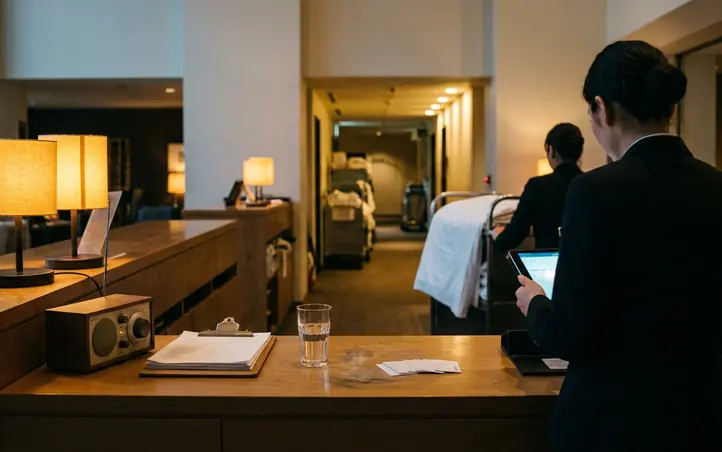
Venue managers often use a 45-minute twilight transition between 9:00 PM and 9:45 PM to change the room's behaviour. Lighting dims gradually. Audio levels rise in controlled steps. Staff adjust the pace of clearing, seating and drinks service. Guests read these details quickly, even if nobody announces the change.
The timing is context-dependent. A kitchen running fast, with early table turnover, can support an earlier move towards nightlife energy. A slower dining room may need a gentler handover so guests do not feel rushed out of conversation.
Pro Tip: For mixed groups, choose the room based on the first two hours and the last hour. If both parts make sense, the middle usually takes care of itself.
Planning Notes for Hosts and Guests
Guests should ask practical questions before treating an event night as a complete plan. The reservation policy, set times, dress code, minimum spend, table location, music volume and seated-versus-standing energy all affect the experience more than a vague promise of DJs or live entertainment.
- Reservation policy: Check whether a booking secures a table for the full evening or only for a dining window.
- Set times: Ask when the room changes pace, not just when the DJ starts.
- Table location: A table near the performer can feel exciting for one group and too exposed for another.
- Music volume: Dinner, shisha and late dancing need different acoustic conditions.
- Spend terms: Clarify deposits, minimums and cancellation rules before inviting a group.
Hosts need a different checklist. The entertainment brief should describe the room before and after the headline moment, not only the act itself. Sound checks, performer changeovers, guest arrival patterns, green-room access and service routes all shape whether the programme feels seamless.
Licensing and sound control
Temporary event activity may require formal notice, and organisers should check official guidance before building a programme around live music, extended hours or a one-off activation. The relevant starting point is GOV.UK Temporary Event Notices guidance.
Operations teams commonly work around a 10 to 15 clear working day submission window for Temporary Event Notices, with the exact route depending on the event type and local requirements. Acoustic testing during build-out and detailed floor plans can also help pre-empt noise complaints from nearby residents. This is especially relevant where live percussion is proposed late at night; after 11:00 PM, local council noise abatement restrictions may require a switch to purely electronic, volume-capped DJ sets.
Scope and Limitations
This article is a news-style format analysis for London and South Kensington nightlife planning. It is not a live calendar of confirmed events.
Line-ups, licensing conditions, opening hours, door policies and prices can change by venue and date. A room described as DJ-led one weekend may host a live feature the next, while a hybrid night may be adjusted because of staffing, licensing, performer availability or acoustic constraints.
The guide also avoids unsupported claims about audience size, growth rates, ticket sales or popularity rankings. The more useful question for planning is not which format is supposedly biggest, but which format matches the group's timing, appetite and tolerance for noise, movement and performance focus.
Key Takeaways
DJ-led nights are the most flexible social format. They let a room warm up gradually, protect early conversation and build towards late energy when the dining rhythm allows it.
Live sets add a performance moment. They work best when treated as short, high-impact intervals integrated into table service, cocktails or lounge programming rather than as full concert structures.
Hybrid formats create the fullest evening arc by combining DJ continuity with live texture, hosting or themed service cues. They are well suited to South Kensington groups who want dinner, cocktails, shisha, music and late socialising without splitting the night across several addresses.
The right choice depends on group size, desired energy, timing, food plans and whether guests mainly want conversation, performance or dancing. In South Kensington, the most memorable plan is rarely built around a single headline act; it comes from choosing a room that can carry the whole evening with confidence.



Add Your Thoughts