
Put Cleaning Transparency Ahead of Shisha Theatre
Transparent cleaning practices deserve more weight than elaborate presentation when choosing a premium shisha lounge. Dramatic lighting and an ornate pipe can sell the evening immediately. Maintained equipment, clearly explained cleaning routines and staff who welcome questions give you something more useful: a practical basis for choosing your table.
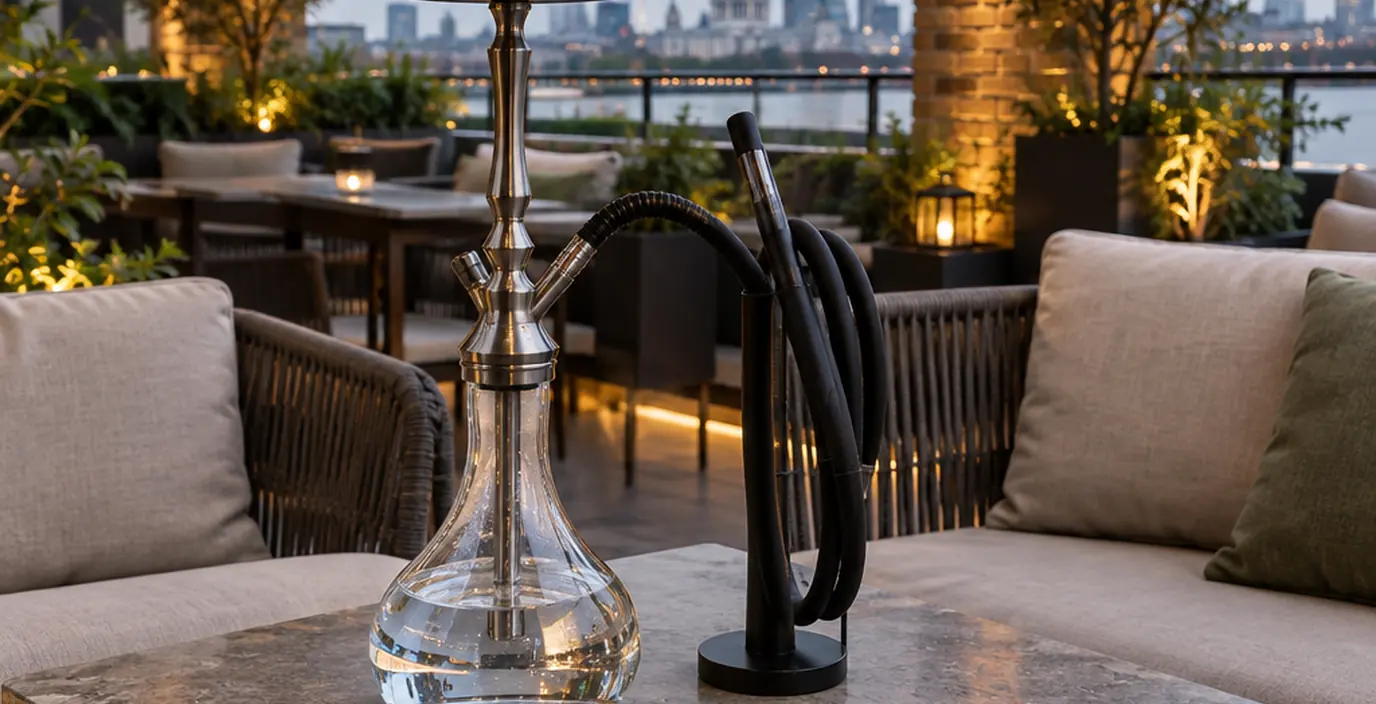
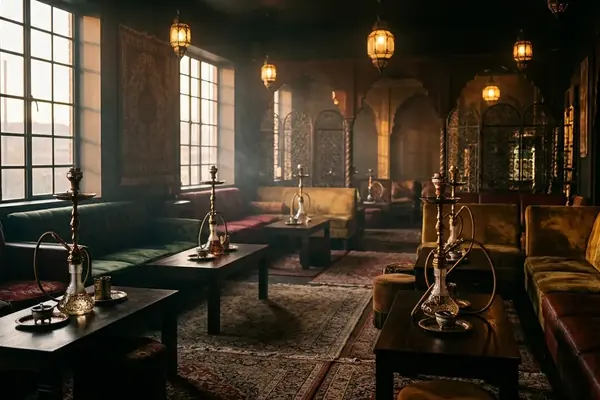
I start a South Kensington evening shortlist with the setup, then consider the spectacle. Shisha lounges can make presentation easy to admire while leaving shared-component cleaning harder to assess. Low lighting and decorated glass can obscure the water and connections you would otherwise check at a glance.
For a night built around sushi & dining, cocktails and a terrace booking, ask the cleaning questions before committing to the shisha stop. A short message gives the reservations team room to explain its process without competing with music or a busy service.
Clean mouthpieces and maintained equipment do not remove the health risks of shisha smoking; consider that separately when deciding whether to include it in your evening.
Ask About the Mouthpiece and Everything Behind It
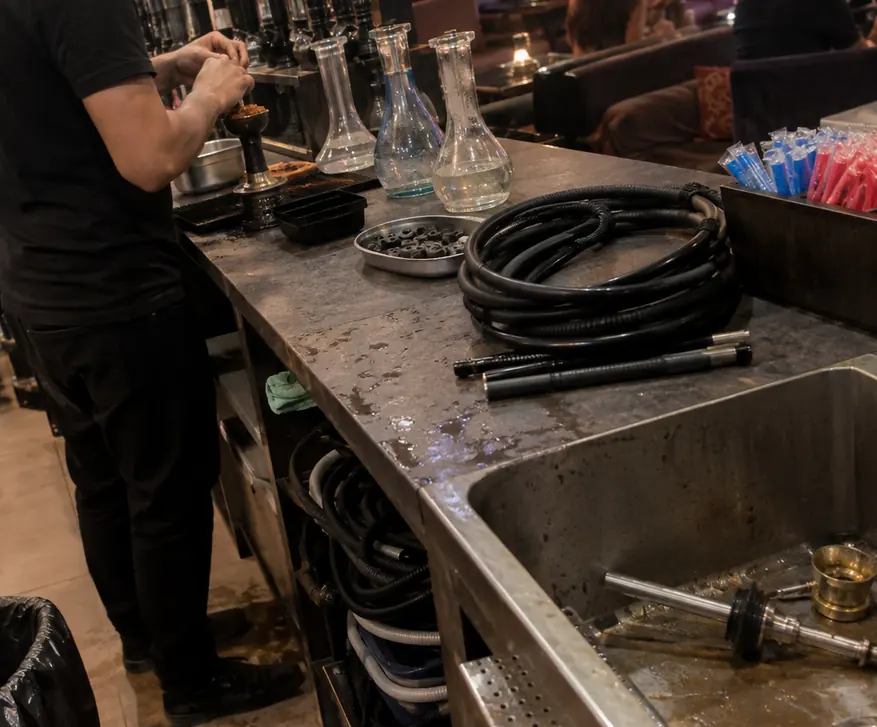
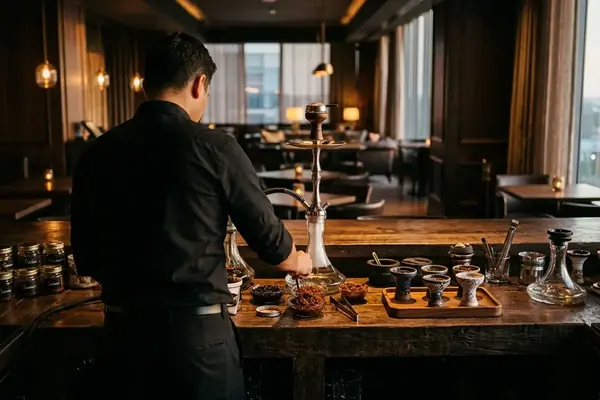
A sealed individual mouthpiece answers one question. The hose, hose-port connection, stem, bowl and water vessel each need their own place in the conversation. Condensation and flavour residue can remain farther along the shared setup, beyond the tip a guest uses.
Start with these exact questions:
- “Does each guest receive a new individual mouthpiece?”
- “Which parts are replaced, and which are cleaned between bookings?”
Listen for a component-by-component answer. “We give everyone a fresh tip” addresses the mouthpiece; follow up about the washable hose, connecting grommet, downstem and water vessel. Ask about the bowl preparation too. This keeps the exchange specific without turning a booking enquiry into an interrogation.
Give Every Guest Their Own Tip
For a group sharing pipes, ask how staff supply individual mouthpieces and explain their use. A tray of sealed tips placed within reach before anyone starts makes the arrangement easy to follow. Confirm that late arrivals can receive their own, rather than relying on whoever organised the table to remember another request.
Check the Hose Joint, Stem Collar and Water
A polished water vessel tells you about its exterior. Equipment condition and cleaning between bookings require a closer look and a clear explanation. Decorative lighting, painted glass and elaborate presentation can make that distinction harder to see across a dark table.
Keep the booking conversation practical:
- “How are the hose and stem cleaned?”
- “How are cleaned components stored?”
- “When is worn equipment replaced?”
Storage deserves attention because washable silicone hoses need to drain after cleaning. Hanging them allows drainage; leaving them coiled can retain moisture and old flavour odours. The useful answer describes what happens after washing, as well as the washing itself.
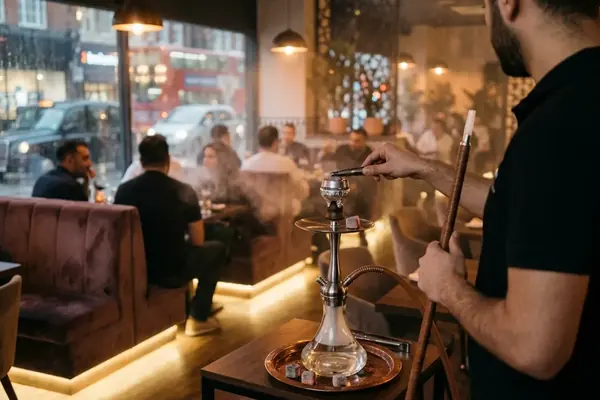
At the table, look at the hose connection, stem collar and visible water before smoking begins. Residue, a visibly soiled mouthpiece, cracked components or a damaged hose connection are concrete reasons to request a replacement. Leave dismantling and adjustments to staff.
Keep the First Check Brief
Use the short interval between delivery and the first coal placement. Point out the component straight away so staff can address it before the pipe is active. That keeps the request straightforward and avoids interrupting the session for a cooldown and rebuild.
Listen for Service That Explains the Setup
Attentive service has visible actions: someone explains the setup, supplies requested mouthpieces and responds promptly when you flag an equipment concern. A confident answer stays with the question you asked.
Consider two possible replies to “What changes between bookings?”
“Each guest gets a new mouthpiece. We clean the shared hose, stem and vessel between bookings, and I can explain how those parts are prepared.”
Compare that with:
“Our pipes look fantastic, and this is our most popular presentation.”
The first response gives you a process to discuss. The second leaves your cleaning question unanswered, however appealing the table may look. These are sample exchanges to help you recognise the difference when booking.
At the table, keep the same precision: “There’s residue around this hose connector. Could you replace the affected part before we start?” That gives the server a component, an observable concern and a clear request. It also lets staff handle the replacement as a routine service task rather than a debate about the whole lounge.
Book the Terrace Layout, Not Just the Table
A sheltered courtyard, open frontage or pavement terrace can each give a South Kensington evening a different feel. The right arrangement lets your group sit comfortably while staff move around the pipe and charcoal equipment. For guests planning a longer outdoor stop after dinner, that physical layout deserves attention before the drinks menu.
Ask these questions before booking:
- “Where is shisha served?”
- “Is the seating open-sided or enclosed?”
- “What happens to the booking if the weather changes?”
- “Will our group fit comfortably without blocking staff access?”
Ask where the pipe sits relative to chairs and walkways. Hoses should have room without stretching across a route people need to use. Staff also need clear access when carrying or adjusting charcoal equipment.
Then connect the layout to your evening: the number of guests, how long you want to stay outdoors, exposure to wind or rain, and how easily you can catch a server’s attention. “Covered seating” warrants a follow-up: establish whether that means your reserved table has shelter or the team will offer another arrangement if rain arrives.
Compare Shisha Setups Before Comparing Presentation
Use the same questions for each venue. A question-led comparison keeps a striking photograph from carrying more weight than the practical arrangements behind it.
| Booking question | What to listen or look for |
|---|---|
| How does each guest receive a mouthpiece? | Individual tips supplied before use, with provision for late arrivals. |
| What happens to shared components between bookings? | A clear explanation covering the hose, connections, stem, bowl and vessel. |
| How are equipment concerns handled? | A straightforward replacement process for residue, cracks or damaged connections. |
| Do staff answer the cleaning question directly? | Specific explanations and action on requests. |
| How will the outdoor seating work? | Comfortable group seating, clear access and an explained weather arrangement. |
Once those answers are in place, compare decorative vessels, lighting and presentation as part of the atmosphere. They can shape a memorable night—after you have established how the equipment and table service work.
Work Through a Six-Person South Kensington Booking
Suppose you are choosing between an ornate lounge and a more understated venue for six guests, with dinner first and cocktails after the terrace. Work through the decision in this order:
- Send both venues the same equipment questions. Ask how individual mouthpieces are supplied and what happens to shared components between bookings. Follow up wherever an answer covers only the disposable tip.
- Confirm the outdoor arrangement. Establish where all six guests will sit, where the pipes will stand and what happens if rain changes the plan. Check that the weather arrangement applies to your booking.
- Choose on the answers, then the atmosphere. If the understated venue explains its cleaning and seating clearly while the ornate lounge replies only about presentation, book the understated table.
- Check before settling into the session. When staff deliver the pipe, look at the mouthpiece, hose adapter, collar and visible water before coal placement. Request any replacement immediately, let staff finish the setup, then order the group’s cocktail round.







Add Your Thoughts